


King Khalid International Airport is operating at approximately 6% of its normal cargo capacity, according to aviation consultancy Aevean, as airline suspensions and continuing security concerns delay the recovery of freight operations
The disruption to operations at King Khalid International Airport (RUH) following attacks earlier this month has removed approximately 1,500 tonnes of outbound air cargo capacity per day from the market, highlighting the impact of regional security developments on international freight networks.
According to aviation consultancy Aevean, cargo capacity at the Saudi capital’s principal airport remains at approximately 6% of normal levels, despite the partial resumption of airport operations.
Related Post



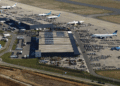
The airport suspended operations on 10 October following attacks claimed by Yemen’s Houthi movement. The closure prompted airlines to cancel or suspend services, disrupting Riyadh’s role as an important gateway for international cargo movements.
Saudi authorities subsequently announced a partial reopening on 25 October, with domestic and selected international services resuming through Terminals 1 and 2. However, the return of scheduled airport operations has not translated into a comparable recovery in cargo capacity.
Asia and Gulf markets among the hardest hit
Maarten Wormer, Head of Consulting at Aevean, said the airport had lost approximately 1,500 tonnes of daily outbound cargo capacity, with very little capacity returning following the partial reopening.
He warned that continuing security concerns and extended suspensions by international airlines were likely to result in a gradual recovery rather than a rapid return to normal operations.
Aevean’s estimates identify several major international destinations affected by the reduction in available capacity:
| Destination | Estimated daily capacity affected |
| Doha | 139 tonnes |
| Dubai | 121 tonnes |
| Hong Kong | 115 tonnes |
| Dhaka | 112 tonnes |
| Cairo | 98 tonnes |
| Combined total | 585 tonnes |
Source: Aevean aviation consultancy estimates, as reported on 27 October 2026.
The figures indicate the geographical spread of the disruption, with Asia, South Asia and major Gulf aviation hubs experiencing significant reductions in available outbound capacity.
The five destinations listed account for 585 tonnes of the estimated 1,500-tonne daily shortfall. The consultancy has not provided a complete destination-by-destination breakdown of the remaining capacity reduction. These figures represent unavailable cargo capacity rather than confirmed volumes of shipments lost or cancelled.
Partial reopening fails to restore cargo operations
Although King Khalid International Airport partially resumed operations on 25 October, the recovery has remained constrained by continuing security concerns and the withdrawal of international airline services.
Aevean reported a brief increase in cargo activity on 20 October, following the introduction of restricted operations on 18 October. However, subsequent volumes remained substantially below normal levels.
Reuters reporting on 26 October, citing aviation analytics firm Cirium, highlighted the scale of the wider disruption. Approximately 4,071 of 4,736 scheduled flights at Riyadh Airport were cancelled between 8 and 25 October, representing around 86% of scheduled services.
The figures underline the extent to which the disruption has affected passenger and cargo connectivity, with international airlines extending suspensions and postponing the resumption of services.
Security concerns continue to affect airline confidence
The partial reopening has taken place against a backdrop of continuing security threats.
On 25 October, the Houthi movement renewed warnings against the use of King Khalid International Airport, describing it as a military target and threatening further attacks.
Saudi authorities have continued reporting missile and drone interceptions as tensions in the region persist. The security situation has therefore remained a major consideration for airlines assessing when to resume regular operations.
For international cargo operators, the uncertainty creates additional challenges in capacity planning, aircraft deployment and the management of time-sensitive shipments.
The disruption also highlights the vulnerability of major aviation gateways to geopolitical developments, particularly where a substantial volume of international freight depends on a limited number of established hubs.
Freight flows face wider network consequences
The loss of Riyadh’s outbound capacity has implications beyond Saudi Arabia, particularly for international freight forwarders and businesses dependent on regular air connections to Asian and Gulf markets.
With capacity to destinations including Hong Kong, Doha, Dubai and Dhaka significantly affected, logistics providers may need to consider alternative routing arrangements through other regional gateways.
However, diverting cargo through alternative airports can introduce additional handling requirements, longer transit times and higher transportation costs, particularly for temperature-sensitive pharmaceuticals, perishables and other time-critical shipments.
The disruption also places pressure on available capacity at alternative regional hubs as airlines and forwarders seek to maintain existing supply chain commitments.
For Saudi Arabia, restoring reliable international air connectivity will be important for supporting its trade, logistics and economic diversification ambitions.
Recovery expected to be gradual
Aevean expects Riyadh’s cargo capacity to recover progressively rather than return immediately to pre-disruption levels.
The pace of recovery will depend on the security environment, decisions by international airlines regarding service resumptions and the restoration of confidence among cargo customers and logistics providers.
Although the reopening of Terminals 1 and 2 represents an initial step towards restoring airport operations, the latest capacity estimates demonstrate that significant disruption remains.
For the international air cargo industry, Riyadh’s situation illustrates how quickly geopolitical instability can remove substantial freight capacity from global trade routes, creating operational challenges that extend well beyond the affected airport.