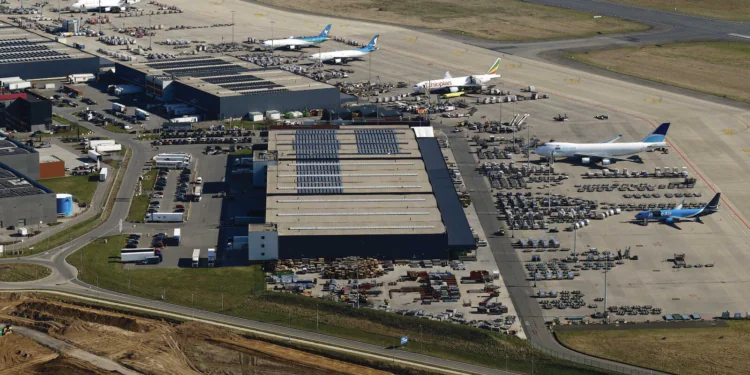

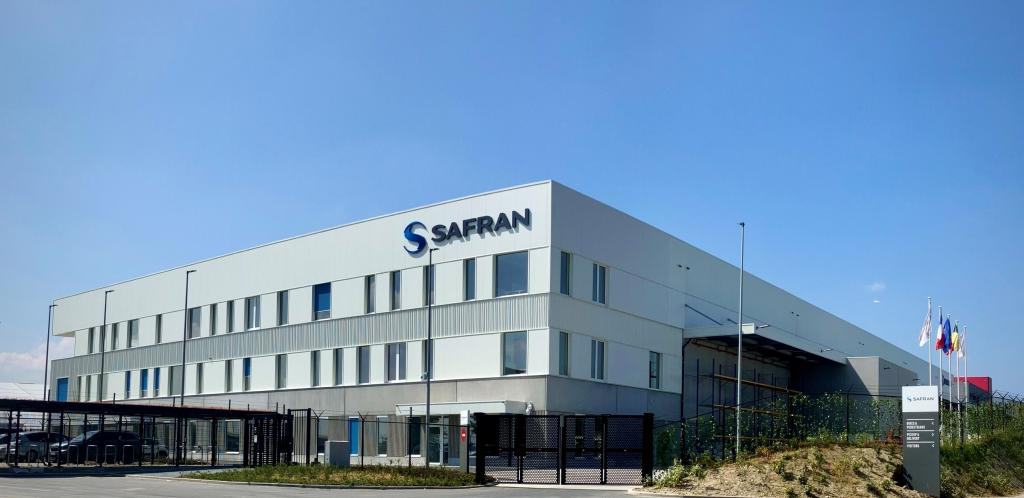
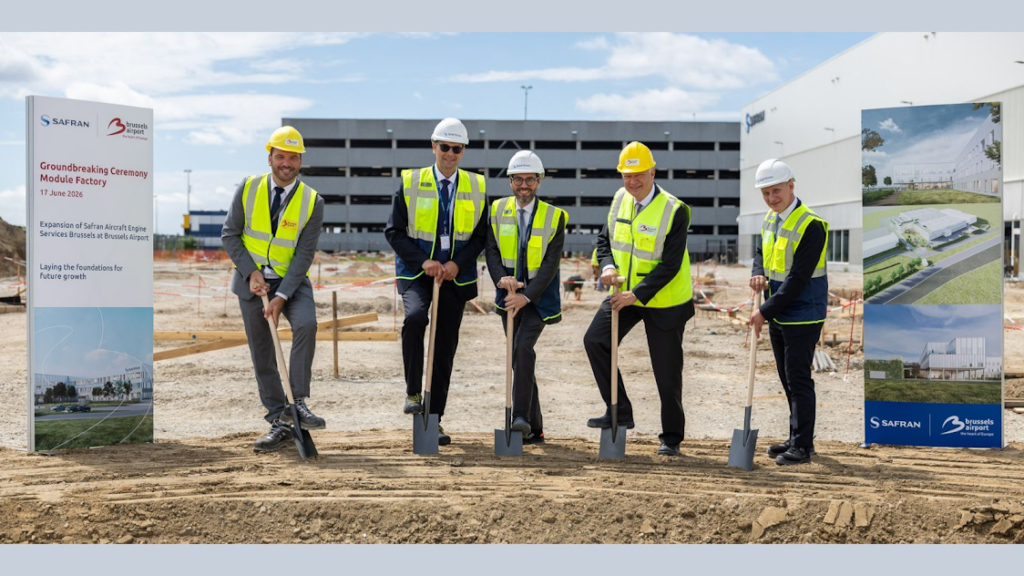
Brussels Airport and Safran Aircraft Engines have launched the construction of a major new module maintenance facility at the Safran Aircraft Engine Services Brussels site, reinforcing Europe’s aircraft maintenance capabilities and supporting the rapidly expanding global fleet of CFM LEAP engines.
The new extension, covering more than 15,000 square metres, will be built adjacent to the existing Safran Aircraft Engine Services Brussels facility inaugurated in 2024. The development represents a significant investment in advanced Maintenance, Repair and Overhaul (MRO) infrastructure and responds to rising worldwide demand for next-generation aircraft engine maintenance.
Once fully operational, the facility is expected to handle up to 1,500 engine modules annually by 2028 and create approximately 250 new highly skilled jobs, further strengthening Brussels Airport’s position as a major European aerospace and industrial hub.
Related Post

Advanced Module Maintenance to Improve Efficiency
The new Module Factory will focus on the specialised maintenance of individual engine modules rather than complete engines. Each module can consist of thousands of precision components requiring advanced technical expertise and meticulous inspection processes.
By separating the maintenance of different engine sections, Safran aims to streamline repair cycles, improve operational efficiency and optimise the utilisation of its global MRO network.
The facility will include a nearly 12,000-square-metre workshop, more than 3,000 square metres of office space, and a multi-storey parking structure with capacity for 380 vehicles.
Safran Aircraft Engines has maintained a long-standing presence at Brussels Airport, where it currently operates a dedicated workshop for the maintenance of CFM LEAP engines, which power many of the latest-generation single-aisle aircraft, including the Airbus A320neo and Boeing 737 MAX families.
Strengthening Europe’s Aerospace Maintenance Network
The expansion forms part of Safran Aircraft Engines’ broader strategy to consolidate and increase its global maintenance capacity, enabling the company to support the fast-growing LEAP engine fleet operated by more than 150 airlines worldwide.
Arnaud Feist, Chief Executive Officer of Brussels Airport, said the project demonstrates the confidence that a leading aerospace company places in the airport’s industrial capabilities.
“The development of this extension reflects Safran Aircraft Engines’ trust in Brussels Airport and reinforces our long-standing partnership. It confirms the airport’s strategic role as an important economic and industrial hub in Belgium, supporting high-value aerospace activities, innovation and employment creation,” Feist said.
Nicolas Potier, Senior Vice President Support & Services at Safran Aircraft Engines, said the investment represents an important milestone in the company’s global MRO expansion strategy.
“The groundbreaking of this Module Factory marks another key step in developing our worldwide maintenance network to support the strong growth of the LEAP engine fleet. The expansion strengthens our presence within the Brussels Airport ecosystem and increases our MRO capacity in Europe, enabling us to remain closer to our customers and their operational requirements,” Potier said.
Supporting Sustainable and Future-Ready Aviation Infrastructure
The new facility has been designed with sustainability at its core. It aims to achieve an E0 energy performance level, meaning its operational energy consumption will be fully offset through on-site energy production.
Environmental features will include rainwater harvesting systems designed to improve water management and increase temporary site autonomy. The project also incorporates the reuse of existing materials and infrastructure, reflecting a circular economy approach.
In addition, the building’s design will maximise natural daylight in operational areas, improving workplace comfort for employees while supporting energy efficiency objectives.
The expansion of Safran Aircraft Engine Services Brussels highlights the increasing importance of specialised aerospace maintenance infrastructure as airlines continue to modernise their fleets with more fuel-efficient engines. The investment not only enhances European MRO capacity but also strengthens Brussels Airport’s role as a strategic centre for high-value aviation technology, engineering expertise and industrial growth.