
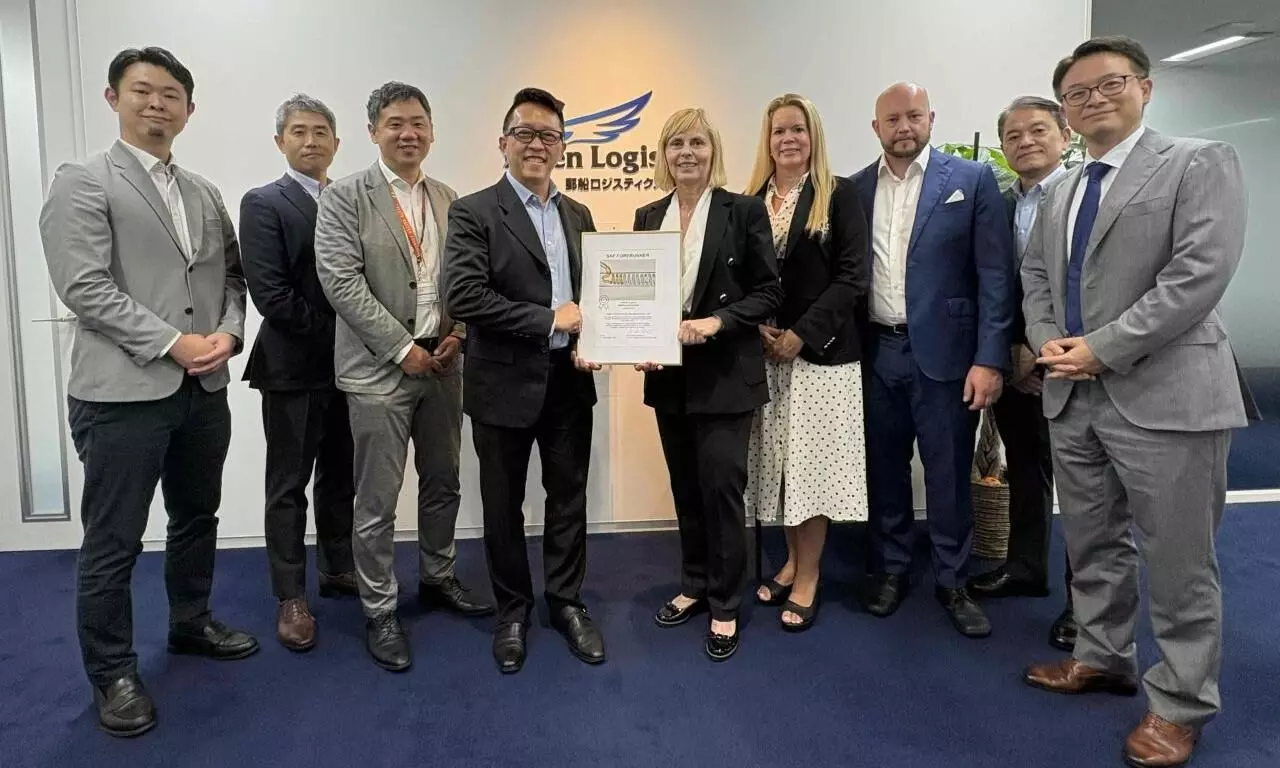
Finnair Cargo and Yusen Logistics have entered into an agreement to support the use of Sustainable Aviation Fuel (SAF) in air cargo, giving Yusen Logistics customers access to SAF-related environmental attributes while supporting efforts to reduce greenhouse gas emissions associated with air freight.
Under the agreement, Yusen Logistics will contribute to the purchase of SAF linked to cargo transported on Finnair-operated flights. The arrangement covers an initial one-year period, with an option for continuation, and is designed to help address Scope 3 emissions associated with customers’ air freight activity.
Book-and-Claim model supports customer reporting
A central element of the agreement is the Book-and-Claim mechanism, which allows customers to support SAF use and claim associated environmental benefits without requiring the physical fuel to be loaded onto the specific aircraft carrying their shipment.
Related Post
Finnair says customers can receive certificates containing information on the SAF’s sustainability attributes, including the producer and supplier, production technology, feedstock, SAF volume, greenhouse-gas emissions reduction and delivery information. The certificates can then support customers’ sustainability reporting.
Eisuke Fukagawa, head of the Air Freight Forwarding Unit at Yusen Logistics Global Management, said customers were increasingly looking for practical measures to address emissions across their supply chains.
“Through our collaboration with Finnair, we can offer customers access to SAF-related environmental attributes through a Book-and-Claim mechanism while maintaining the service quality they require,” Fukagawa said.
The approach allows existing air freight services to continue while customers participate in a SAF programme through the associated environmental attributes.
Finnair seeks to build SAF demand
For Finnair Cargo, the agreement provides another mechanism for increasing customer participation in SAF and helping create demand for greater production capacity.
Gabriela Hiitola, senior vice president at Finnair Cargo, said customer commitments to SAF could help support the development of production and availability in the years ahead.
“By creating long-term demand for SAF, we can help support the growth of production and availability in the years ahead,” Hiitola said.
Finnair has been offering SAF-related solutions to cargo customers through a contribution model in which customers help fund SAF purchases and receive verified certificates documenting the associated emissions-reduction attributes.
SAF remains a limited but growing aviation fuel source
SAF is currently one of the principal tools available to the aviation industry for reducing lifecycle greenhouse-gas emissions from jet fuel.
Although SAF and conventional fossil-based jet fuel produce broadly similar carbon dioxide emissions during combustion, SAF can have a lower lifecycle carbon footprint, depending on its feedstock and production pathway.
Finnair said that in 2025, SAF represented less than 1% of global jet fuel production, while it accounted for 1.6% of the airline’s total fuel consumption.
The limited availability of SAF remains one of the major challenges for aviation’s energy transition, making long-term purchasing commitments from airlines, logistics companies and cargo customers an important part of efforts to stimulate the market.
Scope 3 emissions remain a focus for freight customers
For logistics companies and cargo shippers, aviation emissions generally form part of their Scope 3 emissions, which cover indirect emissions occurring across a company’s value chain.
Finnair’s cargo SAF programme allows customers to contribute towards SAF purchases and use the associated verified environmental attributes in their emissions reporting. The physical SAF is not assigned to an individual shipment or aircraft; instead, its environmental attributes are tracked separately under the Book-and-Claim system.
This distinction is important for air cargo customers seeking to incorporate SAF into corporate emissions-management programmes without changing their existing transportation arrangements.
Yusen expands its sustainability offering
The agreement adds a SAF option to Yusen Logistics’ wider air freight sustainability strategy as the company responds to increasing demand from customers for lower-carbon transportation solutions.
For Finnair Cargo, meanwhile, the partnership strengthens the commercial case for expanding SAF use across its network.
The agreement was concluded with the support of Western Associate Inc. (WAI), Finnair’s General Sales Agent in Japan.
As airlines, freight forwarders and shippers face increasing pressure to address aviation-related emissions, SAF programmes based on verified environmental attributes are becoming an increasingly important component of corporate air-freight sustainability strategies.