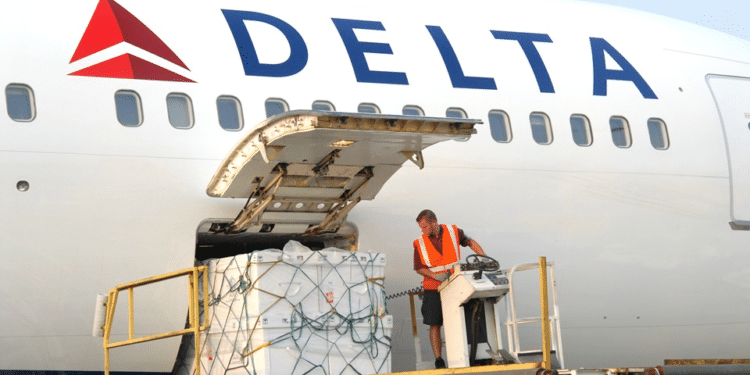


LATAM Cargo has transported 829 tonnes of freight in 46 weeks on its direct freighter service between Miami International Airport (MIA) and Belo Horizonte/Confins International Airport (CNF), as the route approaches its first year of operation.
The weekly service, launched to provide a direct cargo link between Miami and Minas Gerais, is expected to surpass 900 tonnes once it completes 52 weeks of operation. The service operates on Saturdays using Boeing 767-300Ffreighters, with capacity of up to 50 tonnes per flight.
The cargo carried on the route has primarily comprised equipment, components, spare parts and other shipments serving Brazil’s mining, rail and industrial sectors, according to LATAM Cargo and BH Airport.
Related Post




Andres Varela, Commercial Director for LATAM Cargo in the United States and Asia, said the first year of the service demonstrates the demand for a direct freighter connection between Miami and Minas Gerais.
“The consolidation of the Miami–Belo Horizonte route in this first year reinforces the importance of a direct freighter connection between Miami and Minas Gerais and customers’ confidence in the operation,” Varela said.
He added that the service supports industries including mining, rail and heavy industry by providing transportation for equipment, components and parts with greater speed and predictability.
Miami strengthens Minas Gerais cargo connectivity
The route has also coincided with changes in the flow of international cargo between Florida and Minas Gerais.
According to data released by LATAM Cargo and BH Airport, cargo originating in Florida and destined for Minas Gerais increased by 16.3% compared with the period before the route was introduced, using January-August 2025 as the baseline. Over the same comparison, LATAM’s share of that market increased from an average of 19.3% to 35.6%.
BH Airport’s share of the Minas Gerais international cargo market increased by 7 percentage points over the period. For cargo transported through the LATAM-BH Airport partnership directly to Belo Horizonte, market share increased from 0.5% before the route was introduced to 13.4% after its launch, according to the companies.
The figures provide an indication of the role the direct service has played in expanding cargo options between the United States and Brazil’s Minas Gerais state, particularly for industrial supply chains.
BH Airport positions Confins as multimodal cargo hub
The Miami service forms part of BH Airport’s broader strategy to develop Minas Gerais as an international logistics platform. The airport describes itself as the state’s only primary bonded customs terminal and integrates air, road and maritime cargo operations.
More than 15,000 square metres are dedicated to international cargo operations at the airport, which handles freight for sectors including healthcare, automotive and mining. The airport also has direct international connections involving destinations such as Miami, Orlando, Lisbon, Panama City, Santiago and Buenos Aires.
Geovane Medina, Commercial Manager at BH Airport, said the value of the Miami connection extends beyond the flight itself because cargo can be handled through customs clearance, warehousing, import processing and distribution at the airport.
“The first year of the route demonstrates that air connectivity gains even greater value when it is integrated with infrastructure capable of continuing the flow of cargo within Brazil,” Medina said. He added that the Miami connection forms part of the airport’s strategy for the sustainable expansion of its cargo operation.
Part of LATAM Cargo’s wider network
The Miami–Confins operation is part of LATAM Cargo’s international network serving Brazil and other markets. The carrier says its network combines dedicated freighter capacity with cargo capacity aboard passenger aircraft. Its current fleet includes Boeing 767 freighters, while Miami serves as one of its strategic cargo hubs.
For Minas Gerais, the direct freighter service provides an additional international cargo gateway for importers and exporters, particularly companies whose supply chains depend on machinery, industrial components and other time-sensitive shipments.
With 829 tonnes moved during its first 46 weeks, the Miami–Confins route is on course to exceed 900 tonnes during its first 52 weeks, according to the latest figures released by LATAM Cargo and BH Airport.