
Civil Aeronautics Board data highlights strong outbound momentum, growing competition and continued reliance on passenger bellyhold capacity
The Philippines’ international air cargo sector recorded robust growth during the first quarter of 2026, with rising export demand across electronics, apparel and e-commerce supply chains driving a significant increase in cargo and mail volumes.
According to official statistics released by the Philippine Civil Aeronautics Board (CAB), the country’s international air cargo and mail traffic reached 124.457 million kilograms between January and March 2026, representing a 16% year-on-year increase compared with the same period in 2025.
Related Post

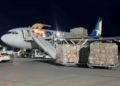
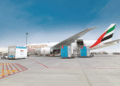
The latest figures underscore the Philippines’ growing importance within regional manufacturing and trade networks while reflecting the continued expansion of cross-border e-commerce and time-sensitive export shipments across Asia.
Export momentum outpaces imports
A defining feature of the first-quarter performance was the strength of outbound cargo demand.
International export cargo volumes increased by 23% year-on-year, significantly outpacing 10.4% growth in inbound shipments, indicating a strengthening export environment supported by the country’s electronics manufacturing sector, garment industry and expanding e-commerce fulfilment operations.
The widening gap between export and import growth suggests the Philippines is becoming increasingly integrated into regional production and supply chains, where fast, reliable air freight services are essential for supporting high-value manufacturing and just-in-time logistics.
The trend also places greater pressure on airlines to allocate sufficient outbound capacity while maintaining competitive service levels across key international trade lanes.
Passenger airlines remain the backbone of air cargo
Despite continued expansion in dedicated freighter services, the Philippine air cargo market remains heavily dependent on passenger aircraft bellyhold capacity.
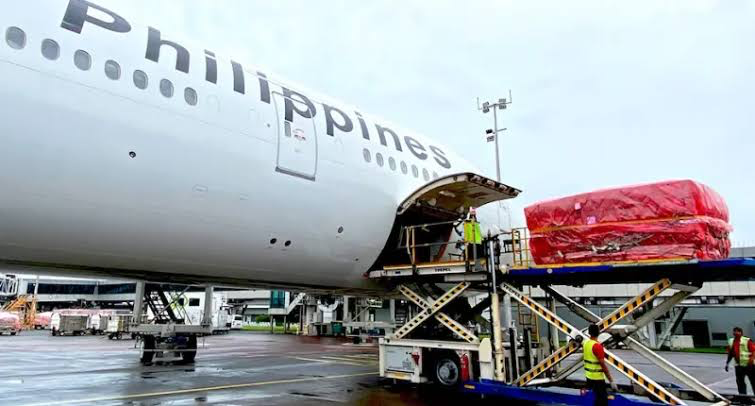
Official CAB data shows Philippine Airlines (PAL) handled 21.33 million kilograms of international cargo and mail during the quarter, accounting for a 17.14% market share, maintaining its position as the country’s largest international cargo carrier.
Cebu Pacific ranked second, transporting 18.61 million kilograms, representing 14.95% of total international cargo volumes.
Together, the two Philippine carriers accounted for just over 32% of all international cargo and mail traffic, highlighting the continued importance of passenger aircraft networks in supporting the country’s export logistics.
Because both airlines primarily transport freight in the lower deck of passenger aircraft rather than operating extensive freighter fleets, cargo capacity remains closely linked to passenger flight frequencies, aircraft utilisation and network planning.
This structural dependence continues to shape the country’s air freight market, where available bellyhold space remains a critical component of export supply chains.
Dedicated freighter operators expand market presence
The latest data also points to a gradual diversification of available cargo capacity.
Royal Air Charter Services emerged as the third-largest operator, transporting 9.25 million kilograms, equivalent to a 7.43% market share.
Although still considerably smaller than the country’s two largest carriers, the airline’s performance highlights the increasing role of dedicated cargo operations in supporting specialised freight requirements and expanding capacity within a market historically dominated by passenger airlines.
The continued growth of freighter services provides exporters with greater flexibility while strengthening the country’s resilience against fluctuations in passenger flight schedules.
International carriers intensify competition
Beyond the leading domestic operators, the Philippine market remains highly competitive among international airlines serving regional and long-haul cargo routes.
Major international carriers including Cathay Pacific Airways, Singapore Airlines, Air Hong Kong, FedEx, EVA Air, Korean Air and Emirates each accounted for between approximately 3% and 6% of total international cargo volumes during the quarter.
The relatively balanced market shares among these operators illustrate the competitive nature of international cargo services into and out of the Philippines, where adjustments in aircraft deployment and network capacity can quickly influence market positioning.
The strong performance of FedEx reflects the growing importance of express logistics and time-definite delivery services, driven largely by cross-border e-commerce and business-to-business shipments.
Meanwhile, Air Hong Kong’s continued presence highlights the strategic role of regional feeder operations linking Southeast Asia with major air cargo hubs across East Asia.
Strengthening role in regional trade
The first-quarter results indicate that the Philippine air cargo sector is evolving beyond simple volume growth.
Rising export demand, increasing competition among airlines and the gradual expansion of dedicated freighter capacity collectively point towards a more mature and diversified market.
The country’s strong position within electronics manufacturing, semiconductor production, apparel exports and fast-growing e-commerce fulfilment continues to generate demand for reliable air freight services connecting the Philippines with key markets across Asia, North America and Europe.
As manufacturers continue to optimise supply chains around speed and reliability, the Philippines is expected to play an increasingly important role within regional logistics networks, reinforcing the strategic importance of efficient air cargo infrastructure and airline connectivity.
While passenger bellyhold capacity remains fundamental to the market, the growing participation of dedicated cargo operators and international freight carriers is creating a more competitive operating environment capable of supporting the country’s expanding export economy.