
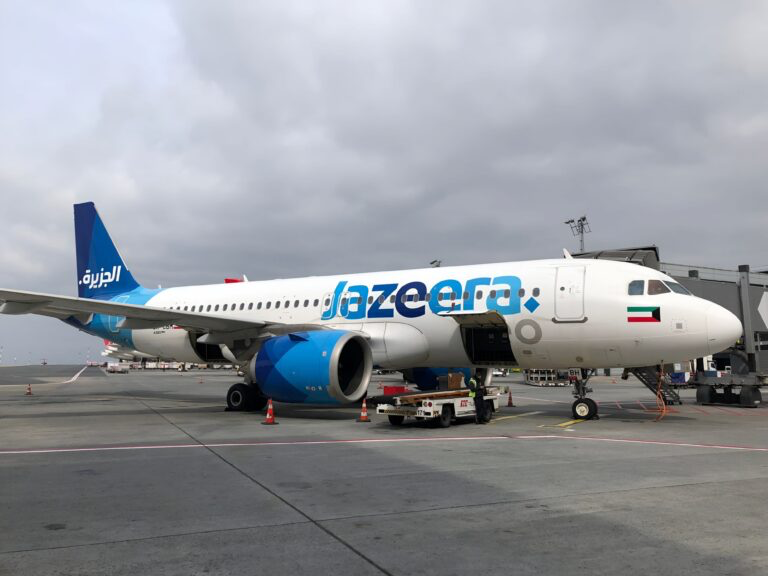
In response to ongoing regional airspace disruptions, SATS Ltd. has partnered with Jazeera Airways to maintain critical cargo connectivity to Kuwait through newly established dual operational bases in Saudi Arabia.
The initiative enables Jazeera Airways to sustain passenger and cargo flows into Kuwait via alternative air-land logistics corridors following restrictions affecting operations at Kuwait International Airport. The model is part of a broader contingency framework designed to ensure continuity of essential supply chains during the ongoing regional conflict.
Dammam cargo hub becomes key logistics gateway
At the centre of the operation is SATS’ cargo facility at King Fahd International Airport in Dammam, which spans approximately 60,000 square metres and serves as a primary cargo processing hub for Jazeera Airways’ Airbus A320neo operations.
Related Post

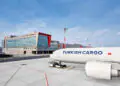
SATS began handling Jazeera Airways cargo flights from Dammam on 26 March 2026, managing the full spectrum of inbound shipments destined for Kuwait. These include general cargo as well as temperature-sensitive and essential goods such as frozen meat, fresh produce, fruit, vegetables, and pharmaceutical supplies.
Once processed, cargo is transported overland from Dammam into Kuwait, forming a continuous air-road logistics chain designed to bypass disrupted aviation corridors.
Dual-base strategy strengthens regional resilience
The Dammam operations complement Jazeera Airways’ second Saudi base at Qaisumah–Hafar Al-Batin International Airport, which commenced operations earlier on 11 March 2026. Together, the dual-base structure forms the backbone of the airline’s cross-border logistics initiative.
Under this model—internally referred to as Project Baraka—Jazeera Airways has significantly expanded its operational footprint, serving 27 destinations and operating more than 1,500 flights. The programme has enabled the provision of approximately 450,000 seats and substantial cargo capacity across its network through mid-May 2026.
Ensuring continuity of essential supply flows
SATS stated that its Dammam station plays a critical role in ensuring uninterrupted movement of essential goods into Kuwait during a period of heightened regional instability.
Bob Chi, CEO of SATS APAC Gateway Services, highlighted the importance of maintaining lifeline connectivity for essential commodities. He noted that the collaboration with Jazeera Airways supports the movement of food, pharmaceuticals, and critical spare parts, helping to stabilise supply chains into Kuwait amid shifting geopolitical conditions.
He further emphasised that SATS’ global footprint across 27 countries enables the company to reroute and adapt cargo flows in response to evolving airspace constraints, ensuring continued service reliability for airline and logistics partners.
Jazeera Airways highlights rapid operational adaptation
Barathan Pasupathi, Chief Executive Officer of Jazeera Airways, described the establishment of the cross-border air-land model as a rapid and necessary response to unprecedented operational challenges.
He underscored the importance of the partnership with SATS in maintaining the uninterrupted flow of essential goods into Kuwait, particularly food products and critical supplies, during a period of sustained regional disruption. According to Pasupathi, the initiative has helped preserve both passenger connectivity and cargo continuity, supporting broader economic and community needs.
Regional cargo network adapts to airspace volatility
SATS operates multiple cargo facilities across the Arabian Peninsula, including in Riyadh, Dammam, and Jeddah in Saudi Arabia, as well as in Oman. This regional infrastructure positions the company as a key enabler of alternative logistics pathways across Gulf Cooperation Council (GCC) markets affected by airspace restrictions.
These facilities collectively allow SATS to facilitate emergency and time-sensitive cargo movements between air hubs in Saudi Arabia and neighbouring GCC states, reinforcing supply chain resilience across the region.
As geopolitical conditions continue to evolve, the Dammam–Kuwait air-land corridor highlights a growing reliance on hybrid logistics solutions that integrate aviation and ground transport to maintain essential trade flows in constrained environments.