
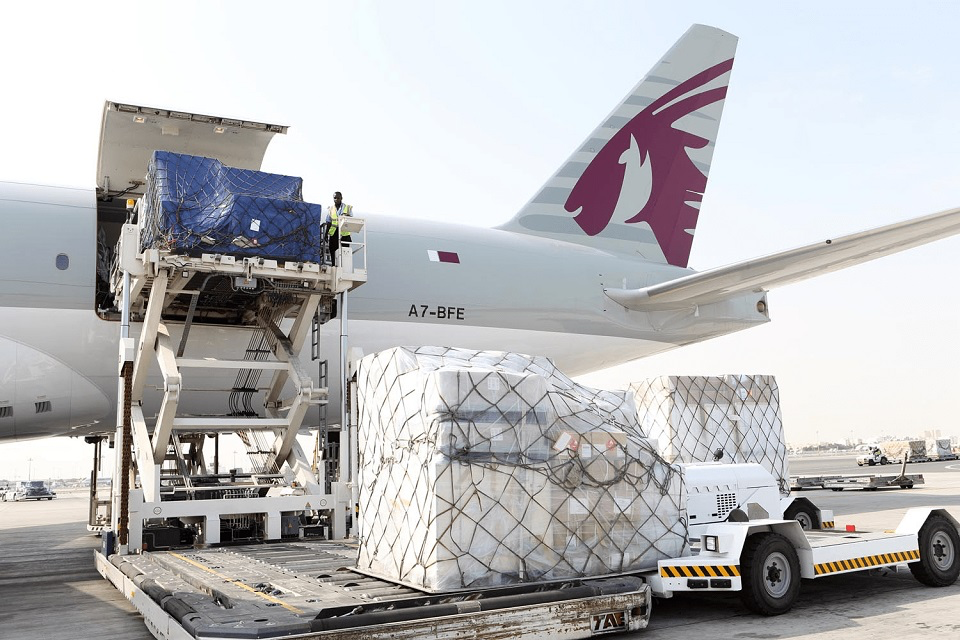
Qatar Airways Cargo has initiated a phased resumption of freighter operations from its Doha hub, signaling a cautious but strategic return to key global cargo corridors following recent airspace restrictions in the Middle East.
The carrier confirmed that, effective 21 March, it has reinstated dedicated freighter services to a broad range of international destinations spanning Asia, Europe, Africa, and the Americas. Markets now being served include Vietnam, China, Thailand, South Korea, Nigeria, Kenya, Germany, the Netherlands, Belgium, the United States, Brazil, Ecuador, and Panama—reconnecting critical supply chains that had been disrupted in recent weeks.
The restart follows temporary operational clearance granted by the Qatar Civil Aviation Authority, which has authorised limited flight corridors to and from Doha. These controlled routes are enabling a partial recovery of cargo throughput while broader airspace conditions continue to stabilise.
Related Post




In a formal statement, the airline noted that it is “resuming selected freighter operations to and from Doha” under these restricted conditions, while simultaneously maintaining its wider freighter network beyond Qatar to ensure continuity across major global trade lanes.
Maintaining Network Integrity
Even as Doha operations ramp up, the carrier has prioritised network resilience by sustaining freighter services that bypass its home hub. This dual-track strategy has allowed Qatar Airways to preserve capacity on high-demand international routes and minimise disruption for global cargo customers.
Additionally, the airline is operating a limited number of passenger flights, leveraging available bellyhold capacity to supplement dedicated freighter lift—an approach widely adopted across the industry during periods of constrained operations.
However, certain shipment categories remain temporarily restricted. These include live animals (with exceptions for pets and horses on select routes), human organs and blood, and Q-Prime critical emergency cargo. All other product segments continue to be available through standard booking channels, including the airline’s Digital Lounge platform and regional sales teams.
Full restoration of operations remains contingent on the complete reopening of Qatari airspace, pending further directives from the civil aviation authority.
Capacity Trends Reflect Gradual Recovery
The incremental return of freighter services from the Gulf is contributing to a broader recovery in global air cargo capacity, although the market remains uneven across regions.
According to data from Rotate, worldwide cargo capacity declined by 7% year-on-year over the most recent weekend—an improvement compared with a 10% drop the previous week, 15% earlier in the month, and a sharp 21% contraction at the end of February, when regional tensions first escalated.
Despite this upward trajectory, capacity linked to the Middle East continues to lag significantly behind 2025 levels. Flows from Asia to the Middle East were down 28% year-on-year, while Middle East–Europe capacity fell by 25%.
Conversely, Asia–Europe lanes have seen a substantial 37% increase in capacity, as airlines redeploy aircraft to bypass constrained Middle Eastern corridors and compensate for lost connectivity.
Strategic Implications for Global Trade
The measured restart of operations by Qatar Airways Cargo underscores the critical role Gulf hubs play in facilitating intercontinental freight flows. Doha, in particular, serves as a vital junction linking Asia, Europe, Africa, and the Americas.
As geopolitical and operational uncertainties persist, the ability of carriers to dynamically reconfigure networks—balancing hub operations with point-to-point alternatives—will remain central to maintaining supply chain stability.
For now, the gradual reintroduction of freighter capacity from Doha offers a cautiously optimistic signal to the air cargo market, even as full normalisation depends on broader regional recovery.