
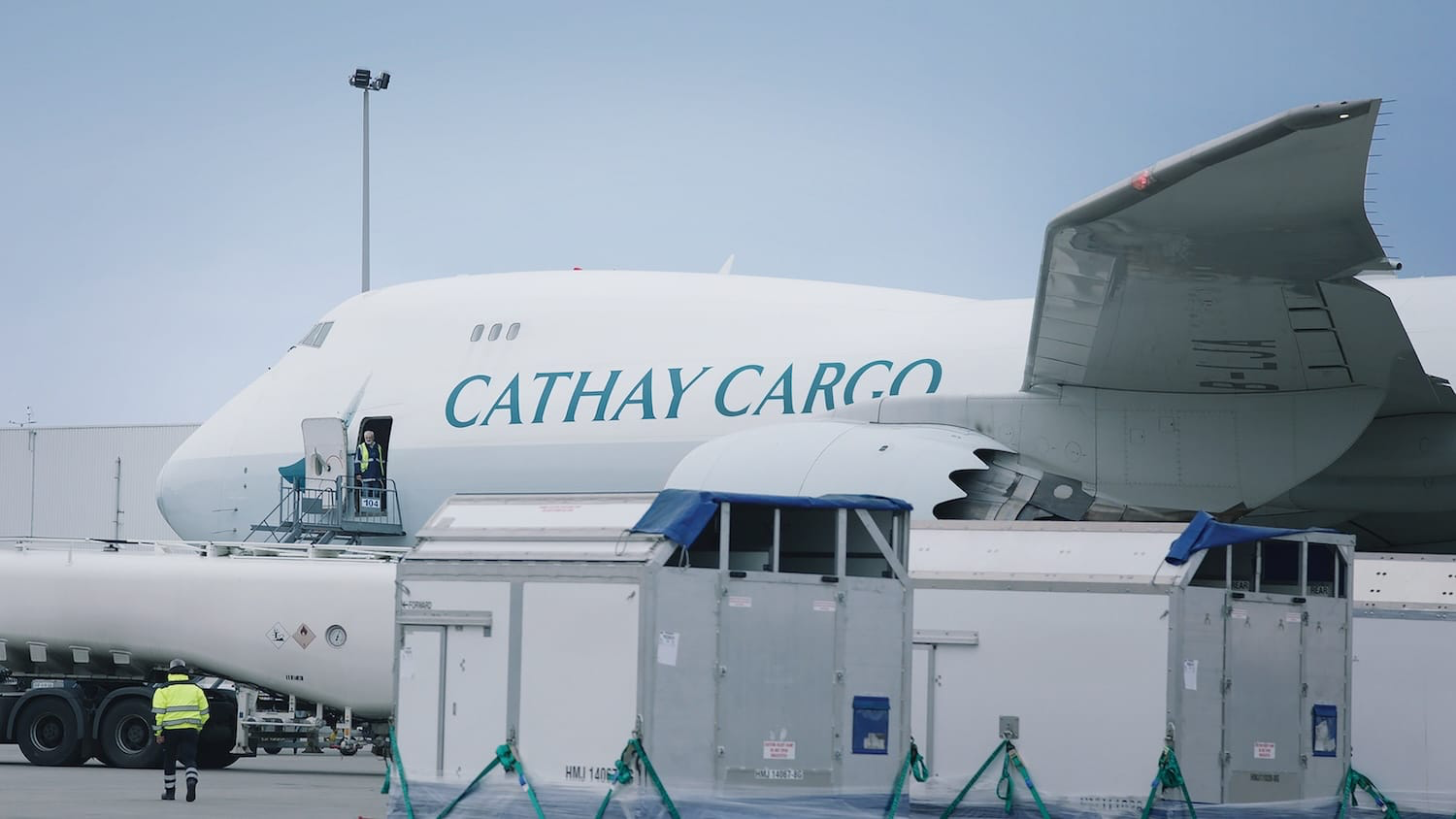
- Cathay Cargo carried eight percent more cargo in April 2026 compared with the same month last year, supported by strong demand to the Americas and healthy inbound traffic to Hong Kong.
- Semiconductor shipments within Asia, technology-related exports from the Americas and pharma volumes from Europe to mainland China helped drive growth across Cathay’s specialist cargo solutions.
- The airline said elevated jet fuel prices linked to Middle East tensions continue to increase cost pressures, while the launch of Bangkok into its freighter network is set to strengthen Southeast Asia connectivity.
Cathay Pacific reported continued momentum in its cargo business during April 2026, with freight volumes rising eight percent year-on-year, supported by resilient demand on transpacific routes, strong inbound shipments into Hong Kong and sustained growth in high-value specialist cargo segments.
The Hong Kong-based carrier said cargo performance during the month was driven by semiconductor shipments within Asia, technology-related exports from the Americas and growing pharmaceutical traffic from Europe into mainland China, reinforcing the importance of specialised cargo solutions in the airline’s broader freight strategy.
The positive cargo performance comes despite a more uncertain operating environment marked by geopolitical tensions, shifting trade patterns and sharply elevated jet fuel prices linked to ongoing instability in the Middle East.
Related Post




According to the airline’s latest traffic figures, Cathay Cargo carried eight percent more cargo in April 2026 compared with the same month last year, while Available Freight Tonne Kilometres (AFTKs) increased by seven percent. During the first four months of 2026, total cargo tonnage rose eight percent year-on-year.
Semiconductor and Pharma Shipments Drive Specialist Cargo Growth
Cathay said its specialist cargo products continued to perform strongly across multiple verticals, particularly within electronics and pharmaceutical logistics.
Demand for semiconductor shipments across Asian markets remained robust amid continued technology supply chain activity, while exports of high-tech products from the Americas into Hong Kong supported volumes within the airline’s Cathay Expert and Cathay Dangerous Goods solutions.
Meanwhile, Cathay Pharma recorded solid growth, particularly on European routes into mainland China, reflecting continued demand for temperature-sensitive healthcare products and pharmaceutical logistics services.
Lavinia Lau, Chief Customer and Commercial Officer at Cathay, said cargo demand remained relatively resilient even as some regional markets softened.
“Tonnage continued to record year-on-year growth in April,” Lau said. “While volumes from our home market eased due to softer demand into South Asia, the Middle East and Africa, demand to the Americas remained solid. Overall tonnage into Hong Kong also remained healthy, supported by robust traffic from Southeast Asia, the Americas and Europe.”
She added that specialist cargo solutions continued to be a major contributor to the airline’s freight performance.
“Our specialist solutions continued to perform well, with semiconductor shipments within Asia, and technology-related exports from the Americas into Hong Kong driving growth in our Cathay Expert and Cathay Dangerous Goods solutions. Cathay Pharma also saw solid growth, particularly from Europe to the Chinese Mainland,” Lau stated.
Elevated Fuel Prices Add Pressure Amid Geopolitical Uncertainty
Despite healthy cargo growth, Cathay acknowledged that elevated operating costs remain a major concern for the airline industry.
The carrier said jet fuel prices continued to remain at highly elevated levels due to ongoing tensions in the Middle East, increasing cost pressures across both passenger and cargo operations.
“April continued to present a mixed picture,” Lau noted. “Travel demand was robust and passenger load factors were high driven by holiday and seasonal travel, while cargo volumes were healthy. However, jet fuel prices remained at highly elevated levels amidst the ongoing Middle East situation, increasing cost pressures.”
The airline added that it continues to closely monitor geopolitical developments while maintaining operational flexibility across its network.
Cathay has already adjusted parts of its passenger operations in response to changing market conditions, extending the suspension of services to Dubai and Riyadh until the end of August 2026 while redeploying aircraft capacity to stronger-performing markets including Manchester and Rome.
Bangkok Added to Freighter Network
As part of its broader cargo network expansion strategy, Cathay recently added Bangkok to its freighter network, strengthening connectivity across Southeast Asia and reinforcing the carrier’s regional cargo footprint.
The airline said the addition is expected to support future cargo growth and improve flexibility for regional supply chains moving through Hong Kong.
“Looking to May, we expect the momentum seen in April to continue following the ‘Golden Week’ holidays,” Lau said. “We were also delighted to welcome Bangkok into our freighter network earlier this month, further strengthening our presence in Southeast Asia.”
Industry analysts note that Southeast Asia continues to emerge as one of the fastest-growing manufacturing and e-commerce regions globally, creating significant opportunities for airlines with strong regional freighter connectivity and integrated hub operations.
Passenger Business Also Maintains Strong Momentum
Alongside cargo growth, Cathay Pacific’s passenger business also reported strong year-on-year gains during April 2026.
The airline carried 17 percent more passengers compared with April 2025, while Available Seat Kilometres (ASKs) increased by 15 percent. Passenger traffic during the first four months of 2026 rose 19 percent year-on-year, supported by strong leisure travel, seasonal demand and major international events hosted in Hong Kong.
Cathay said demand was particularly strong during Easter travel, the Cathay/HSBC Hong Kong Sevens tournament and the lead-up to Golden Week holidays, while premium cabin demand also benefited from exhibitions and trade events held in Hong Kong.
Looking ahead, the airline expects both passenger and cargo demand to remain relatively resilient despite broader market uncertainty and changing booking behaviour among travellers.