
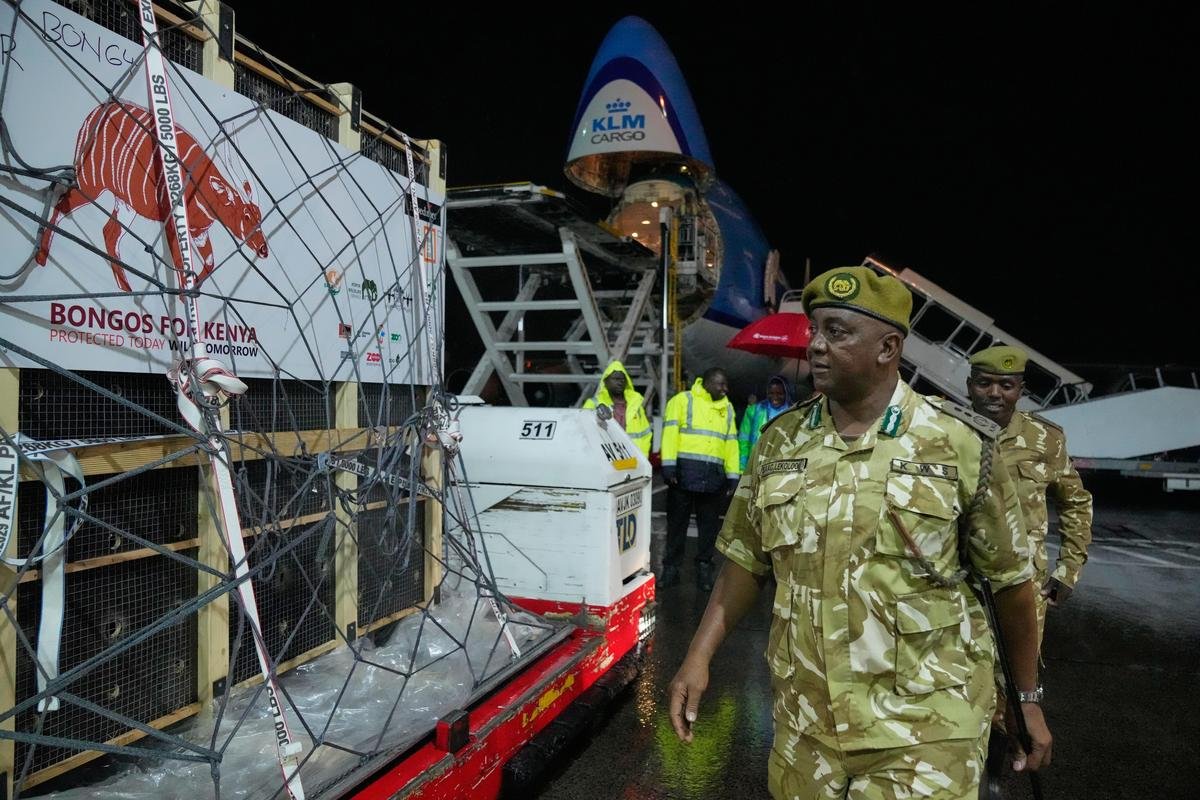
In a significant demonstration of how aviation logistics can contribute to global conservation, Air France KLM Martinair Cargo has successfully transported four critically endangered mountain bongos from the Czech Republic to Kenya. The move forms part of a wider international effort to safeguard and restore one of the world’s rarest antelope species.
The relocation is aligned with the “Return of the Bongos to Kenya” initiative, a long-term conservation programme focused on rebuilding sustainable populations of mountain bongos in their native habitat. With only an estimated 66 individuals remaining in the wild, the species faces an urgent risk of extinction, making such coordinated interventions critical.
The four male bongos—carefully selected based on age, health and genetic diversity—are expected to play a vital role in strengthening breeding programmes and enhancing the genetic resilience of the population in Kenya. Their reintroduction represents a strategic step toward eventual rewilding and long-term species recovery.
Related Post



The complex transport operation was executed in close collaboration with key conservation stakeholders, including the Kenya Wildlife Service, Mount Kenya Wildlife Conservancy, and the European Association of Zoos and Aquaria, alongside other international partners. The initiative underscores the importance of cross-border cooperation in addressing biodiversity loss.
Highlighting the broader implications of the mission, Air France KLM Martinair Cargo emphasised the role of global air cargo networks in supporting environmental and humanitarian objectives. The company noted that the project illustrates how specialised wildlife logistics, combined with aviation expertise, can deliver meaningful outcomes for conservation.
Beyond the immediate relocation, the initiative reflects a growing intersection between logistics and sustainability, where air cargo operators are increasingly engaged in projects that extend beyond commercial activity. By enabling the safe and efficient transport of endangered species, the sector continues to demonstrate its capacity to support critical global challenges.