
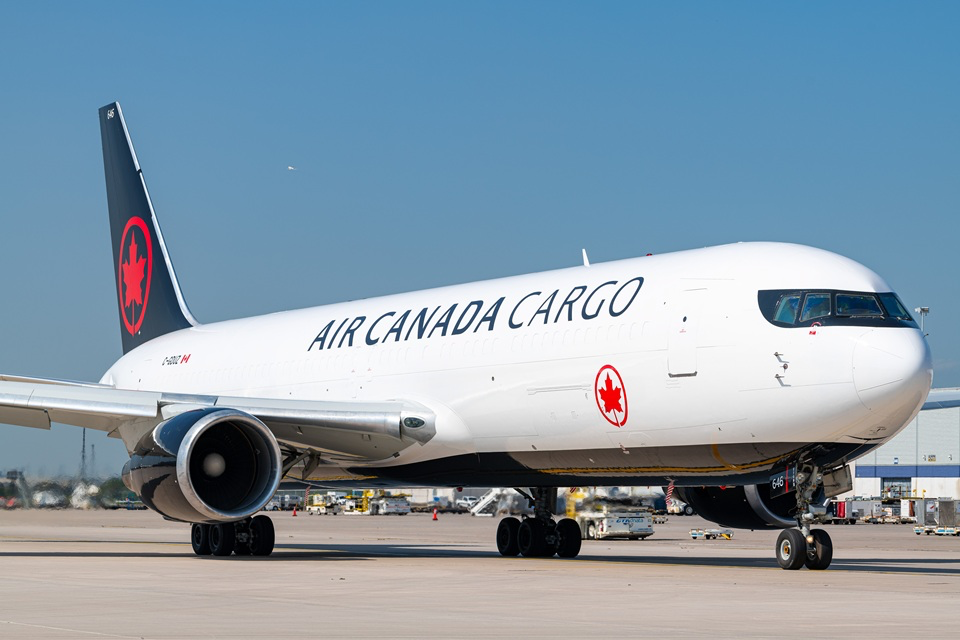
Air cargo operations at Air Canada posted a modest but notable increase in revenues during the first quarter of 2026, supported primarily by robust domestic demand and the introduction of fuel surcharges amid rising operating costs. The results underscore a mixed performance across the carrier’s cargo network, with domestic strength offsetting softer conditions in international markets.
Cargo operating revenues reached C$259 million for the quarter, reflecting a 3.5% year-on-year increase from C$250 million in the same period of 2025. The airline attributed this growth to improved cargo volumes across all regions, alongside stronger yields within its domestic market.
According to the carrier, “the increase was primarily driven by higher cargo volumes in all markets and yields in the domestic market.” The airline also highlighted the role of cost recovery measures, noting that fuel surcharges—introduced in response to a sharp rise in jet fuel prices—contributed incrementally to overall revenue gains.
Related Post

Geopolitical pressures also shaped pricing dynamics during the quarter. Speaking during the airline’s earnings call, Mark Galardo, chief commercial officer and president of cargo, referenced the ongoing Middle East conflict as a catalyst for adjustments in the cargo division’s pricing strategy. The airline responded by increasing spot rates and implementing an additional carrier surcharge, reflecting broader volatility in global airfreight markets.
Despite these gains, the airline reported that revenue growth was partially constrained by weaker yields in international and transborder markets. This divergence highlights ongoing challenges in long-haul cargo demand, where pricing pressure and shifting trade flows continue to impact performance.
At the group level, Air Canada reported a strong financial start to the year. Total operating revenues rose 11% to C$5.8 billion, marking a record first-quarter performance. President and chief executive Michael Rousseau emphasized the airline’s continued momentum, citing both operational execution and strategic alignment as key drivers.
“Our operating income of $117 million represented a positive $225 million swing from the prior year, while adjusted EBITDA reached a record $623 million, up 61%,” Rousseau said, underscoring the company’s improved financial position.
Fleet composition within the cargo division remained unchanged during the period. The airline continues to operate six dedicated Boeing 767 freighter aircraft, maintaining a stable capacity base as it navigates evolving market conditions.
Overall, the first-quarter results reflect a cargo business benefiting from resilient domestic demand and adaptive pricing strategies, while still contending with headwinds in international markets and broader geopolitical uncertainty.