
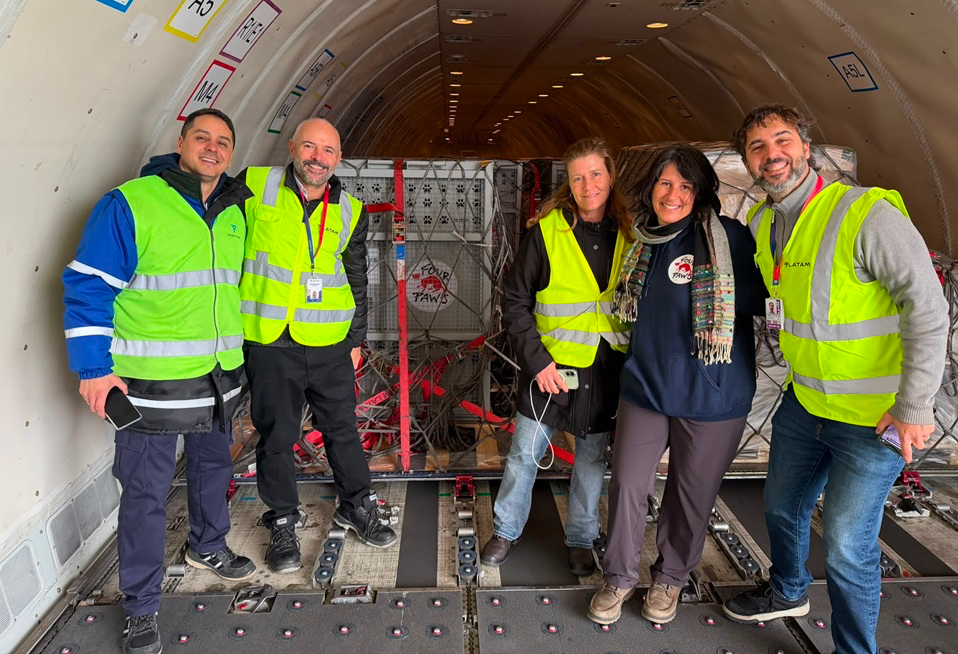
key highlights from the operation:
1. One of the World’s Largest Relocations: Part of a massive global rescue effort led by Four Paws International moving 30 big cats simultaneously from South America to North America and Africa.2. High-Precision Logistics & Strict Safety Standards: LATAM Cargo moved 5.4 metric tons of payload on a Boeing 767 freighter under strict IATA Live Animals Regulations (LAR), with full environmental control and dedicated onboard specialists.3. Multidisciplinary Technical Coordination: A multi-week planning effort involving over 15 internal specialists alongside global partners (DSV and Intermodal Logistics Services) to ensure full CITES and international regulatory compliance.
LATAM Cargo has completed a dedicated charter operation transporting 15 rescued big cats from Buenos Aires, Argentina, to Denver, Colorado, in a complex airfreight mission supporting an international animal relocation programme.
The shipment comprised eight tigers and seven lions and included a technical stop in Santiago, Chile. Following their arrival in Denver, the animals were transferred to specially equipped road vehicles for the final journey to The Wild Animal Sanctuary in Keenesburg, Colorado.
Related Post
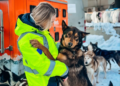
The flight formed part of a wider rescue and relocation programme involving 30 lions and tigers from the former Zoo Luján in Argentina. The animals are being moved to permanent sanctuary facilities in North America and Africa, following an extensive veterinary assessment and months of preparation.
LATAM Cargo operated the North American sector of the mission in collaboration with freight forwarder DSV, animal welfare organisation Four Paws International and origin agent Intermodal Logistics Services.
The operation involved 5.4 tonnes of cargo, including 2.5 tonnes representing the animals and 2.9 tonnes of specialised transport crates. Planning began several weeks before departure, with more than 15 LATAM Cargo professionals involved across commercial, product, operational standards and procedures, legal, quality, operations, ramp and warehouse functions.
The scale and sensitivity of the shipment required close coordination between the various teams to establish the route, verify the transport crates and ensure compliance with regulatory and operational requirements.
The animals were transported in accordance with the IATA Live Animals Regulations, with the Boeing 767 freighter’s hold maintained under controlled conditions for pressurisation, temperature and continuous ventilation.
LATAM Cargo also verified CITES permits and the health, veterinary and other regulatory documentation required at origin, during transit and at destination.
Animal welfare was incorporated into the operational planning. A specialist accompanied the animals during the flight and monitored the handling procedures on the ground. Ramp movements were planned in advance to reduce exposure, waiting times and unnecessary handling.
After landing in Denver, the big cats were transferred directly to specially equipped trucks supplied by the sanctuary, limiting their time on the ramp before the final road journey to Keenesburg.
Daniel Leng, senior vice president of operations at LATAM Cargo, said the charter required close coordination between multiple teams and strict adherence to live-animal transport procedures.
“Executing a charter for 15 big cats means coordinating a highly complex operation where there is no margin for deviation,” Leng said.
He added that the operation required a controlled environment throughout the flight, compliance with the applicable live-animal regulations and carefully managed ground transfers.
The relocation follows a major veterinary assessment of animals at the former Zoo Luján, where specialists identified a range of health problems requiring ongoing treatment and care. The rescued animals are now being transferred to sanctuary environments designed to provide species-appropriate conditions and long-term veterinary support.
For the air cargo sector, the operation highlights the level of planning and specialist coordination required when moving large and sensitive live-animal shipments across international borders.