
China-Europe e-commerce air cargo is undergoing a significant adjustment following the European Union’s removal of the €150 customs duty exemption and introduction of a temporary €3 customs duty on low-value imports from July 1, 2026.
The new regime applies to distance sales of imported goods in consignments with an intrinsic value of up to €150. The €3 duty is calculated per customs item according to tariff classification, rather than simply being charged once on every parcel. The measure is scheduled to remain in place until July 1, 2028, when the EU Customs Data Hub is expected to support the next phase of the system.
Early data indicates that the change is already affecting direct China-Europe e-commerce flows, with parcel volumes falling at major European gateways, freighter capacity being reduced and logistics providers reassessing fulfilment models. At the same time, overall cargo volumes at airports such as Liège and Frankfurt have remained comparatively resilient, highlighting a broader shift rather than a simple disappearance of demand.
Low-Value Parcel Volumes Fall At Liège
Liège Airport provides one of the clearest early indicators of the impact.
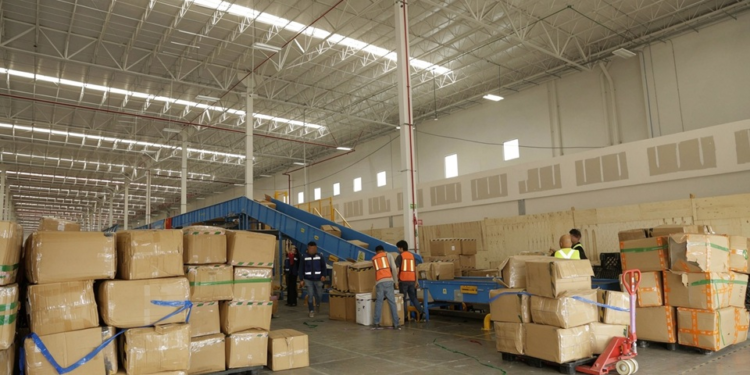
According to the airport, the number of e-commerce parcels handled in the Liège-Bierset customs zone fell 24% in July compared with July 2025 and 41% compared with June 2026. B2C volumes valued below €150 declined sharply following the implementation of the new EU rules.
At the same time, parcels valued above €150 increased by 10%, according to customs data cited by the airport. The contrasting movements suggest that some operators are already adapting their shipment profiles as the economics of low-value direct-to-consumer imports change.
The adjustment is also visible in freighter capacity. Rotate data cited in the original analysis showed European e-commerce imports falling 24% in July compared with June, while direct China/Hong Kong-to-Europe freighter capacity subsequently settled at approximately 28% below June levels. Capacity reductions were particularly pronounced at several European and Asian gateways.
However, the decline in e-commerce has not translated into an equivalent reduction in Liège’s overall cargo performance. Total cargo tonnage increased 4% year on year in July despite a 4% decline in aircraft movements. Pharmaceuticals, data-centre equipment and flowers contributed to the broader cargo mix.
Frankfurt Records China Cargo Decline
Frankfurt Airport is also seeing a reduction in China-origin cargo, although overall freight volumes have continued to grow.
Joachim von Winning, Director Cargo Partnerships at Fraport AG, said China-origin tonnage declined 16.5% in July, with the decline accelerating after the beginning of the month. At the same time, tonnage to China increased 10.5%, while Frankfurt’s overall cargo volumes rose 0.9%.
The figures indicate that the impact is concentrated on particular trade flows rather than representing a broad contraction of Frankfurt’s cargo business.
Fraport has also stressed that e-commerce remains an important part of its cargo strategy. The airport is working with customs authorities on standardised procedures for e-commerce shipments and maintaining cooperation with international airport and industry partners to improve cargo processes.
The Frankfurt data should nevertheless be interpreted cautiously. The decline in Chinese low-value exports to Europe began before the July reform, meaning the new customs duty is one factor in a broader market adjustment rather than the sole cause of the decline.
Fulfilment Strategies Move Closer To Europe
The most significant long-term consequence may be a change in where e-commerce inventory is positioned.
Platforms that previously relied heavily on individual parcels moving directly from Chinese sellers to European consumers can increasingly use consolidated imports, regional warehouses and local fulfilment. This allows larger consignments to enter Europe through conventional freight channels before products are distributed domestically.
Frederic Horst, Managing Director of Trade and Transport Group, told the original analysis that Chinese e-commerce exports to Europe had already been weakening before July and that platforms were moving towards more localised inventory. Such a shift could increase the role of ocean freight for replenishment while retaining airfreight for urgent or time-sensitive inventory.
Lawrence Tse, Head of E-commerce at Menzies Aviation, similarly described the immediate impact as a moderation of some China-Europe e-commerce flows rather than a structural decline in consumer demand.
He said China and Hong Kong-to-Europe air cargo tonnage fell by around 9% month on month in July, while Hong Kong volumes declined approximately 19% from June. Tse also said the more notable change was in fulfilment and supply-chain strategies, including the balance between direct cross-border airfreight, bulk importation, regional fulfilment and local inventory.
Customs Data Becomes A Critical Cargo Input
The new regime is also increasing the importance of data quality throughout the air cargo supply chain.
The European Commission has confirmed that Product Identifiers will become mandatory from November 1, 2026. The requirement is intended to improve traceability and enable customs authorities to identify products more accurately and strengthen safety and compliance controls.
For airlines, ground handlers, marketplaces and customs representatives, this means product-level information must increasingly be available before shipments reach the airport.
Accurate descriptions, tariff classifications, product identifiers and electronic records will become increasingly important, particularly where consolidated e-commerce shipments contain large numbers of individual products.
The objective is effectively to move more of the customs process upstream. Advance cargo data, electronic connectivity, automated screening and sorting, shipment visibility and closer coordination between airlines, handlers, customs authorities and final-mile operators can help ensure that shipments arrive with the information required for risk assessment and clearance.
China Remains The Dominant Origin
Despite the disruption to direct parcel flows, China remains by far the largest origin for low-value e-commerce imports into the EU.
European Commission data shows that China accounted for approximately 93% of low-value imported items by volume in 2025. Low-value consignments represented 97.9% of imported items, although they accounted for only 2.1% of total import value, underlining the scale of the parcel-based e-commerce model.
Fashion and accessories, consumer electronics, beauty and personal-care products, household goods and other lightweight consumer products remain important categories.
The key question is therefore whether European consumers are buying fewer products or whether the same demand is being served through a different logistics model.
Early evidence points towards the latter possibility in at least some segments.
General Cargo Could Gain From The Shift
Murat Odabas, Managing Director of GlobeCross, said the market was moving away from direct B2C parcel flows towards more consolidated freight and local inventory.
He reported a sharp decline in B2C e-commerce imports from China immediately after July 1, followed by reductions in freight capacity and volatile remaining volumes. At the same time, GlobeCross has observed a shift towards general cargo imports alongside the buildup of local warehousing capacity.
This could produce a materially different air cargo network.
Instead of the previous model of individual orders moving directly from Asian sellers to European consumers, platforms could increasingly follow a structure of Asian production, consolidated international transport, European inventory, local fulfilment and final delivery.
Air cargo would remain part of the chain, but its role could change from transporting individual consumer orders to replenishing European inventory and supporting time-sensitive products.
Capacity Searches For Alternative Markets
The immediate challenge for freighter operators is how to redeploy capacity withdrawn from China-Europe e-commerce routes.
Rotate data cited in the analysis indicated that much of the removed capacity had not yet been redeployed, contributing to lower global freighter utilisation. Converted Boeing 747-400 freighters were particularly affected because of their exposure to ad-hoc operations.
Some capacity is already finding alternative demand. Lufthansa Cargo said it was seeing increased demand for e-commerce shipments moving from Asia across the Pacific to the United States.
Meanwhile, China-Europe and China-UK airfreight remained subdued in late August, with soft rates, ample capacity and weaker conversion of enquiries into bookings, according to Yanwen Express executive Hunter Chen. Airlines have responded with capacity discipline and selective cancellations.
The result is a market in transition rather than one in outright retreat.
November Customs Changes Add Further Pressure
The July €3 customs duty is only the first major operational milestone in the EU’s e-commerce customs reform.
From November 1, Product Identifiers will become mandatory for applicable distance-sale imports. The EU is also preparing a separate e-commerce handling fee, but its final amount and detailed implementation arrangements had not been fixed at the time of writing. Current industry guidance indicates that the fee is separate from the €3 customs duty.
That distinction is important for cargo operators. The July reform has already changed the economics of low-value direct imports; the November data requirements will add another layer of compliance and traceability.
A Different China-Europe Cargo Model
The first month of the new EU regime suggests that the China-Europe e-commerce air cargo market is being reshaped rather than simply reduced.
Low-value parcel volumes have fallen sharply at key gateways, direct freighter capacity has been cut and some operators are reassessing the economics of the traditional cross-border model.
But consumer demand has not necessarily disappeared.
Instead, cargo may increasingly move through consolidated imports, European warehouses, ocean replenishment and conventional general-cargo networks, with airfreight retained where speed remains commercially important.
For airports and airlines, the competitive advantage of the next phase may therefore depend less on simply providing capacity for millions of individual parcels and more on the ability to combine capacity, customs expertise, data quality and flexible fulfilment solutions.
The central question for the coming months will be where that cargo ultimately settles—and whether Europe’s e-commerce market emerges with fewer direct China-Europe parcels but a more diversified air cargo and logistics network.