
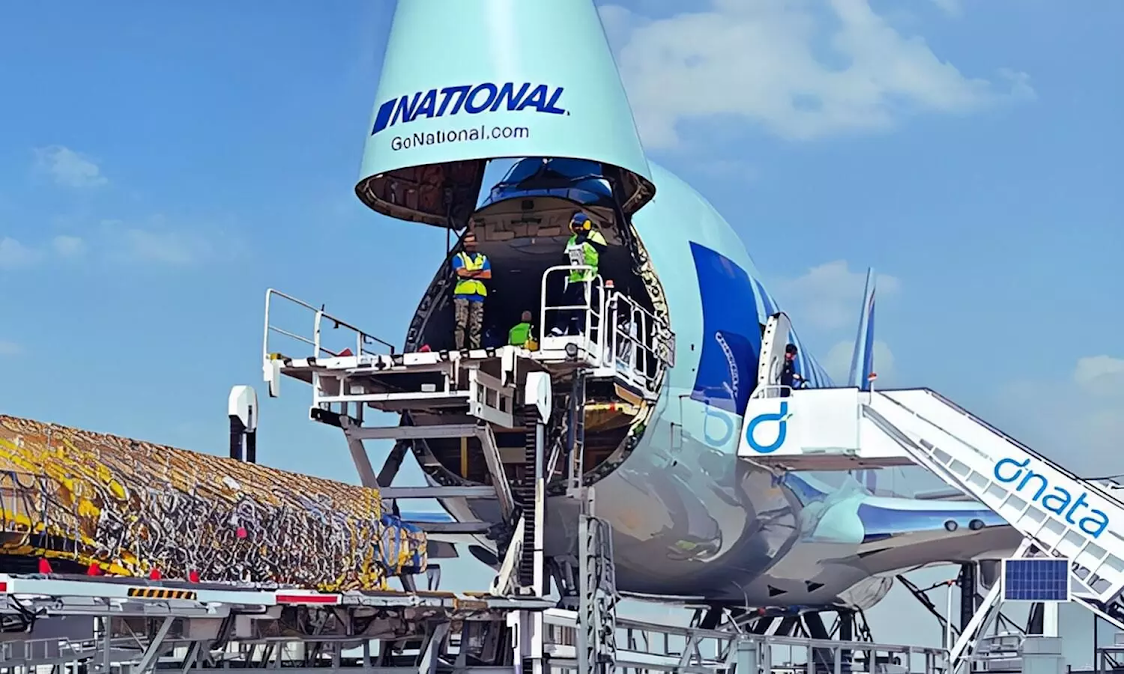
Aircraft asset specialist AerFin has deepened its collaboration with National Air Cargo through an expanded logistics partnership aimed at enhancing efficiency across aircraft teardown operations in the United States.
The agreement focuses on optimising the movement of dismantled aircraft components between key teardown and logistics hubs in Marana, Arizona, and Miami, Florida, creating a more streamlined and controlled supply chain for high-value aviation materials.
Integrated Teardown Logistics Model
The expanded partnership is designed to improve end-to-end coordination across the aircraft end-of-life value chain, ensuring faster, more secure, and better-tracked movement of components from disassembly sites to storage, resale, and redistribution channels.
Related Post



By integrating logistics capabilities more closely with teardown operations, the collaboration aims to reduce turnaround times in aircraft dismantling programmes while maximising the recoverable value of components across global aftermarket demand channels.
Industry participants note that efficient teardown logistics has become increasingly critical as the commercial aviation sector continues to manage large-scale fleet renewal cycles, driving higher volumes of retired wide-body and narrow-body aircraft into the secondary parts market.
Expansion of a 2024 Strategic Relationship
The enhanced logistics agreement builds on an existing partnership established in 2024, when National Airlines initially supported AerFin through materials procurement and supply chain coordination activities.
That collaboration has now evolved into a more comprehensive logistics integration model, extending beyond procurement into direct operational support for teardown programmes and asset redistribution workflows.
The shift reflects a broader trend within the aviation aftermarket sector, where asset specialists and logistics providers are increasingly aligning operations to improve speed, traceability, and cost efficiency across aircraft recycling and component recovery processes.
Focus on Marana–Miami Supply Chain Corridor
A central element of the partnership is the development of a more efficient logistics corridor between Marana and Miami, two key nodes in the US aircraft teardown and distribution ecosystem.
Marana serves as a major site for aircraft storage and dismantling activities, while Miami functions as a critical logistics and redistribution hub connecting recovered components to international markets across the Americas, Europe, and Asia.
The improved coordination between these locations is expected to enhance material flow visibility, reduce handling delays, and support more predictable supply chain performance for high-demand aircraft parts.
Flexible Multi-Partner Strategy Maintained
Despite the expanded collaboration, AerFin confirmed it will continue to engage with a broader network of logistics and aviation partners across other segments of its teardown operations.
The company’s approach reflects a flexible, multi-partner strategy designed to maintain resilience across global supply chains and ensure access to specialised capabilities in different regions and operational contexts.
This diversified model is increasingly common in the aviation asset management sector, where variability in aircraft types, teardown locations, and parts demand requires adaptable logistics structures.
Strategic Value Creation Across Asset Lifecycle
Simon Bayliss, Chief Operating Officer at AerFin, emphasised the importance of aligning logistics partnerships with operational requirements across the aircraft lifecycle.
He noted that the collaboration strengthens AerFin’s ability to accelerate asset recovery processes while enhancing value creation through improved logistics efficiency and execution speed.
The integration of logistics planning with teardown operations is expected to support more effective inventory management and faster reintroduction of aircraft components into global supply chains.
Evolution from Procurement to Integrated Logistics Support
Alan White, Chief Growth Officer at National Air Cargo, highlighted the evolution of the relationship from initial materials procurement support into a broader logistics partnership framework.
He noted that both organisations are now positioned to jointly support increasingly complex teardown programmes, leveraging combined expertise in cargo transport, materials handling, and aviation logistics coordination.
The expanded collaboration also opens the door to potential future development opportunities in aircraft recycling, parts distribution, and end-of-life fleet management services.
Industry Context: Growing Importance of Aircraft Teardown Logistics
The agreement comes at a time when the global aviation sector is experiencing sustained fleet restructuring, driven by aircraft retirement cycles, supply chain realignment, and demand recovery across passenger and cargo markets.
As airlines continue to modernise fleets, demand for efficient teardown logistics solutions is rising, particularly for wide-body aircraft where component value recovery plays a significant role in overall asset economics.
Improved logistics integration between teardown sites and redistribution hubs is increasingly viewed as a key competitive factor in the aircraft aftermarket sector, enabling faster monetisation of assets and improved supply chain responsiveness.