
An autonomous heavy-lift aircraft has completed a 1,000-kilometre test flight carrying human blood samples in Alaska, in a research programme examining whether unmanned aircraft could provide a reliable option for transporting sensitive biological samples over long distances.
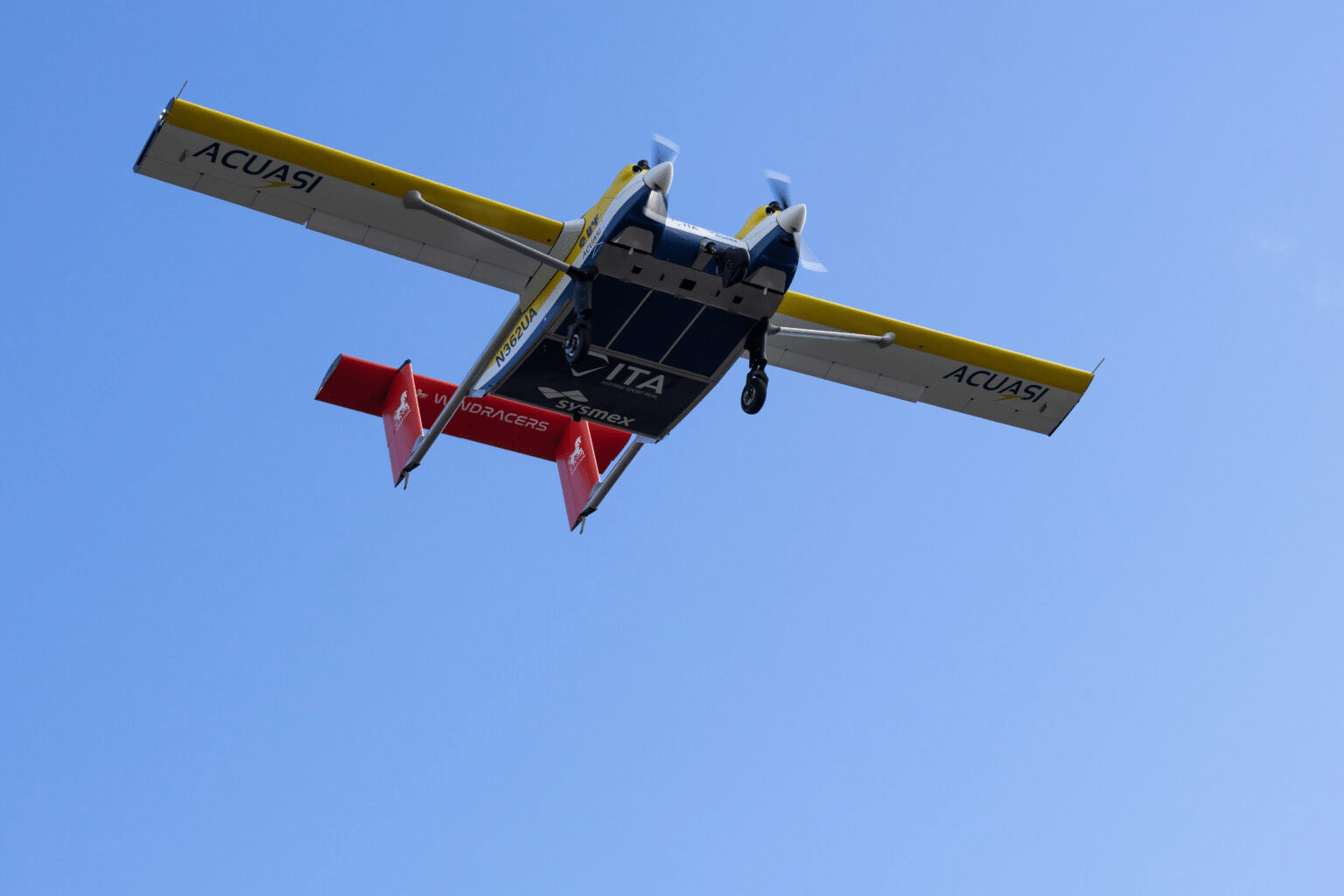
The flight formed part of the International Testing Agency’s (ITA) “Integrity in Flight” research programme, conducted in collaboration with the Alaska Center for Unmanned Aircraft Systems Integration (ACUASI) at the University of Alaska Fairbanks and supported by diagnostics company Sysmex. The aircraft used was Windracers’ ULTRA autonomous fixed-wing platform.
The test flight took place on August 19, 2026, operating from Nenana Municipal Airport in the interior of Alaska. University of Alaska Fairbanks reported that the flight lasted 8 hours and 47 minutes. Windracers said the mission was its first ULTRA beyond-visual-line-of-sight (BVLOS) flight in North America.




Testing sample integrity over long distances
The central objective was not simply to demonstrate the aircraft’s range. Researchers wanted to determine whether blood samples could withstand the conditions associated with a long autonomous flight without compromising their integrity.
The test involved blood samples collected from healthy volunteers. Each volunteer provided two samples, allowing researchers to establish a comparison between samples exposed to the flight and a control group that remained on the ground. The samples were transported in tamper-resistant, temperature-controlled anti-doping kits.
During the flight, onboard sensors monitored temperature, pressure, humidity, vibration and acceleration. Following the mission, the flight and control samples were analysed under the same conditions using laboratory equipment supplied by Sysmex.
The analytical work was conducted with the involvement of Dr Sven Voss, director of the Institute of Doping Analysis and Sports Biochemistry in Dresden, Germany. The laboratory is WADA-accredited, and the project followed the documentation requirements used for blood-sample analysis.
Importantly, the flight was a research test rather than an operational anti-doping sample delivery. The ITA says the purpose is to establish whether autonomous aircraft could become an additional transport option, subject to scientific validation, aviation requirements, chain-of-custody procedures, sample-security protocols and applicable anti-doping rules.
Why Alaska provides a significant test environment
The Alaskan operating environment presents a particularly relevant use case for autonomous cargo aircraft.
Cathy Cahill, director of ACUASI, said 82% of Alaska’s communities are not connected to the road system, creating significant challenges for the movement of medical supplies and samples. The research therefore has potential implications beyond sports testing, particularly for communities where conventional surface transport can be difficult or time-consuming.
The concept is relatively straightforward: healthcare workers could potentially collect samples in remote communities, send them by autonomous aircraft to a laboratory for analysis, and receive medicines or other supplies by air. Such a system could reduce the logistical barriers associated with moving time-sensitive material across difficult terrain.
However, that remains a potential application rather than an established service. The current study is intended to determine whether the aircraft and associated handling procedures can meet the scientific and operational requirements necessary for such missions.
From short-range trials to 1,000 kilometres
The Alaska flight builds on earlier research conducted by the ITA in Doha, Qatar, in 2022.
That earlier programme examined the transportation of urine, blood and dried blood spot samples using drones over distances of up to approximately 20 kilometres. According to the ITA, the study demonstrated the operational potential of short-distance drone transport, while subsequent analysis indicated that relevant blood biomarkers were not adversely affected.
The latest test represents a substantial expansion in distance and operational complexity, moving from short-range drone operations to a 1,000-kilometre autonomous flight in Alaska.
For anti-doping organisations, the potential application is particularly relevant during major sporting events, where samples may need to reach accredited laboratories within demanding timelines. The ITA says autonomous aircraft could potentially provide another option where conventional transport is slower, less predictable or difficult to organise.
Windracers ULTRA and autonomous cargo operations
The aircraft used in the test was Windracers ULTRA, a twin-engine autonomous fixed-wing aircraft. According to the University of Alaska Fairbanks, ACUASI operates two ULTRA aircraft, each with a wingspan of approximately 31 feet, a reported range of about 600 miles and cargo capacity of up to 200 pounds. The aircraft can operate from dirt, grass, ice or paved surfaces.
ACUASI was responsible for flight planning and execution, drawing on its experience with long-range unmanned aircraft operations. Windracers personnel also supported the project.
The combination of autonomous operation, long range and substantial payload capacity is what makes the platform relevant to cargo applications beyond conventional small-drone delivery.
Results still to come
The most important stage of the project is now the scientific analysis.
The ITA plans to compare measurements taken before and after the flight to determine whether the journey produced any discernible changes in red and white blood cell populations and indices relevant to the Athlete Biological Passport.
The organisation has said it intends to submit the findings for publication in a peer-reviewed scientific journal. Results will be communicated after the scientific evaluation has been completed.
That distinction is important. The successful 1,000-kilometre flight demonstrates that the aircraft can complete the mission and that blood samples can be transported through the test environment. It does not yet establish that autonomous aircraft are suitable for routine anti-doping or medical sample transportation.
If the scientific evaluation confirms that sample integrity can be maintained, the research could provide a foundation for further work on autonomous logistics in remote regions, major sporting events and other time-sensitive healthcare supply chains.
The broader significance may ultimately extend beyond sport. Moving sensitive biological material quickly between remote communities and laboratories is a logistics challenge in many parts of the world. The Alaska trial provides a real-world test of whether autonomous air cargo can help address that challenge over distances where conventional transport infrastructure is limited.