
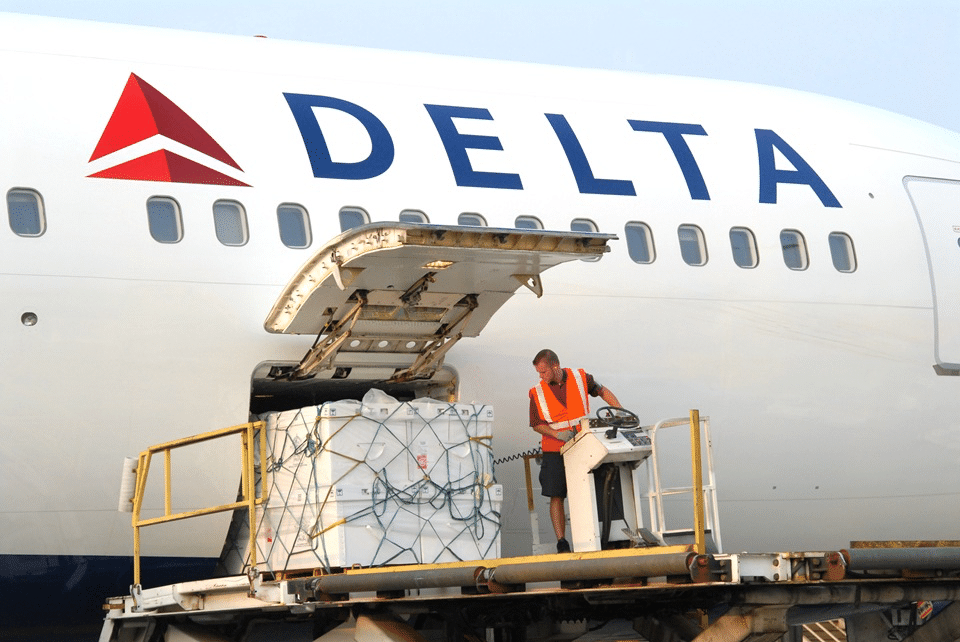
Delta Air Lines reported a 29% year-on-year increase in cargo revenue to $301 million in the third quarter of 2026, with growth driven by a combination of higher shipment volumes and stronger yields.
The Atlanta-based carrier recorded cargo revenue of $301 million for the three months ended 30 September, up from $233 million in the same period last year, according to its financial results published on 9 October. Delta said volume and yield contributed roughly equally to the increase.
The performance comes amid sustained growth in the North American air cargo market, where demand has been outpacing the global average. However, Delta’s reported revenue growth cannot be directly equated with an increase in cargo volumes, as pricing and shipment mix also influence the result.
Related Post

Data from the International Air Transport Association (IATA) show that cargo demand among North American airlines, measured in cargo tonne-kilometres (CTK), increased by 6.6% year on year in August. This was the strongest regional performance recorded during the month.
Across the first eight months of 2026, North American cargo demand increased by 5.9%, according to the figures cited in the industry data.
The Asia–North America trade lane remained a key growth driver. Cargo tonne-kilometres on the route rose by 13.2% in August, marking seven consecutive months of year-on-year growth. The corridor accounted for 23.5% of global air cargo traffic in 2025, according to IATA.
Delta has a presence in the transpacific market and has been expanding its Asian network. However, the transatlantic remains a major component of its international operations. IATA reported that cargo demand between Europe and North America increased by 4.3% year on year in August, extending the trade lane’s growth streak to four consecutive months.
The airline’s cargo performance is also unfolding against a backdrop of elevated fuel costs. IATA reported that global jet fuel prices in August were 79.2% higher than a year earlier, adding to cost pressures across the industry. Delta subsequently reported that its adjusted fuel price for the September quarter averaged $3.61 per gallon, up 60% year on year.
Market disruption has also influenced cargo flows. During Delta’s second-quarter earnings call in July, chief commercial officer Joe Esposito said the airline was benefiting from cargo being rerouted away from the Middle East amid the ongoing conflict, alongside the company’s expansion in Asia.
The latest results underline the growing contribution of cargo to Delta’s diversified revenue base, even as the airline navigates higher operating costs and shifting international trade patterns.