


Global air cargo rates have recorded another significant increase, with the Baltic Air Freight Index rising 6.6% in the week to November 9, 2026. The latest figures point to renewed pricing pressure across major international trade lanes as the industry enters the busiest weeks of the traditional peak season.
Global air freight rates are gathering momentum as shippers prepare for the seasonal surge in shipments ahead of Black Friday, Thanksgiving in the United States and the Christmas shopping period in Europe.
According to the latest figures from TAC Index, the global Baltic Air Freight Index (BAI00) increased by 6.6% in the seven days to November 9, taking its year-on-year growth to 28.2%. The latest rise follows a marginal decline in the preceding week, signalling a renewed strengthening of freight rates across the international air cargo market.
Related Post



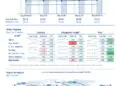
The index has reached its highest level of 2026, moving above the peaks recorded during the previous two peak seasons. The development highlights the growing pressure on available air cargo capacity as seasonal demand builds across major global markets.
The upward trend has emerged despite recent declines in crude oil and jet fuel prices following the US midterm elections, with lower fuel costs yet to translate into any noticeable easing in freight rates.
Asia-Pacific Markets Lead The Increase
The strongest momentum continues to be evident across major Asian export markets, although individual trade lanes are displaying different pricing trends.
The Hong Kong outbound index (BAI30), which incorporates both spot and forward rates, increased by 4.6% week-on-week, bringing its year-on-year gain to 29.2%. Meanwhile, the Shanghai outbound index (BAI80) climbed 5.7% over the same period, recording an annual increase of 21.1%.
Rates were also generally higher from other major East Asian cargo hubs, including Seoul. Taiwan, however, recorded a slight weekly decline on routes to the United States.
In Southeast Asia, freight rates increased from Vietnam, while Bangkok experienced a modest decline. The softer performance from Bangkok comes amid reports of operational backlogs affecting both import and export cargo movements.
An important distinction is emerging between overall market indices and spot pricing. While some established China-US routes have eased slightly from their recent highs, TAC Index’s BAI Spot indicators, which provide a closer reflection of marginal market prices, recorded increases across all major outbound routes from Hong Kong, Shanghai and South Korea.
European Outbound Rates Record Strong Rebound
European air freight markets also experienced renewed upward pressure, reversing the previous week’s weakness on several important international trade lanes.
Transatlantic rates to the United States rebounded significantly, while other routes to Brazil, India and the United Arab Emirates registered substantial increases.
However, the recovery was not uniform across all destinations. Rates from Europe to China declined following a series of earlier increases. Softer pricing was also recorded on routes to Japan, Australia and South Africa.
Among Europe’s leading cargo gateways, Frankfurt recorded particularly strong growth. The Frankfurt outbound index (BAI20) increased by 9.9% week-on-week, supported by higher rates to both the United States and China. Its year-on-year increase consequently reached 48.1%.
London Heathrow also maintained positive momentum, with its outbound index (BAI40) advancing 5.6% during the week. This brought its annual increase to 23.4%.
The performance of Frankfurt and London highlights the continued strength of European outbound air freight pricing, although individual markets remain influenced by changing capacity availability and trade-lane demand.
North American Markets See Significant Rate Increases
North American outbound markets also recorded widespread rate increases, particularly on Transatlantic services to Europe and the United Kingdom, alongside routes to China and South Korea.
However, pricing trends remained mixed on southbound services to South America, where increases were not consistent across the region.
Chicago emerged as one of the strongest-performing markets during the reporting period. Its outbound index (BAI50) surged by 21.9% week-on-week, recovering from recent declines and taking its year-on-year increase to 40.3%.
Despite the sharp weekly rebound, Chicago’s index remains considerably below the highest levels recorded earlier in 2026 during the initial stages of the US-Iran conflict.
Mexico also experienced a substantial increase in outbound freight rates to Europe, with prices rising sharply week-on-week and remaining significantly higher than the corresponding period last year.
Peak Season Demand Keeps Pressure On Pricing
The latest TAC Index figures underline the growing strength of the global air cargo market as the industry approaches the most commercially significant weeks of the year.
The combination of seasonal retail demand, changing capacity conditions and stronger pricing across major international gateways is contributing to an increasingly competitive environment for available air freight space.
Earlier November market assessments published by TAC Index and the Baltic Exchange also highlighted the influence of elevated jet fuel costs and demand for semiconductor and artificial intelligence-related equipment on freight pricing.
With the global BAI00 now 28.2% higher year-on-year, the latest weekly increase reinforces the strength of the market heading into the year-end shipping period.
For airlines, freight forwarders and shippers, the coming weeks will be critical in determining how effectively available capacity can accommodate the seasonal increase in cargo volumes while managing continued upward pressure on transportation costs.