
More than USD 10 billion investment to expand long-haul connectivity, strengthen Copenhagen hub and support economic growth across Scandinavia
Scandinavian Airlines (SAS) has unveiled the largest investment in its 80-year history, announcing plans to acquire up to 40 Airbus widebody aircraft as part of a long-term strategy to strengthen intercontinental connectivity between Scandinavia and key global markets.
The investment, valued at more than USD 10 billion at list prices, includes the introduction of Airbus A330-900neoaircraft alongside additional Airbus A330-300 capacity to support near-term network expansion ahead of the arrival of the next-generation fleet. The announcement has been confirmed by SAS through its official communications.
Related Post

The landmark order represents the highest-value aircraft acquisition ever undertaken by the airline and forms a central pillar of SAS’ long-term growth strategy aimed at expanding its long-haul network, enhancing operational efficiency and reinforcing Copenhagen Airport’s position as Scandinavia’s primary international aviation hub.
Historic investment to support global connectivity
The fleet expansion reflects SAS’ ambition to strengthen direct links between Scandinavia and major international business, tourism and cargo markets while meeting growing demand for long-haul travel.
The airline said the combination of new-generation Airbus A330-900neo aircraft and additional A330-300s will provide the operational flexibility required to expand international services over the coming years while ensuring a smooth transition as the new fleet enters service.
The A330-900neo offers significant improvements in fuel efficiency, operating economics, range and passenger comfort compared with previous-generation aircraft, supporting SAS’ objective of modernising its long-haul fleet while reducing environmental impact.
The latest announcement follows SAS’ record order for 55 Embraer E195-E2 regional aircraft announced in 2025, as well as the ongoing renewal of its Airbus A320neo narrowbody fleet.
Together, these investments represent one of the most comprehensive fleet modernisation programmes undertaken by a European airline in recent years.
Copenhagen Airport positioned for long-term growth
Alongside the fleet announcement, SAS released a new socio-economic analysis outlining the potential impact of expanding its operations at Copenhagen Airport through 2030.
According to the study, the airline’s planned growth could support the creation of approximately 25,000 additional jobs while contributing DKK 25 billion to Denmark’s Gross Domestic Product by the end of the decade.
If realised, the expansion would increase the total number of jobs supported by SAS to approximately 64,000, while raising its overall contribution to the Danish economy to around DKK 66 billion.
The analysis also indicates that approximately 4,000 additional jobs could be created in Southern Sweden, reflecting Copenhagen Airport’s strategic role as the principal international gateway for the wider Öresund region.
SAS believes the expanded hub will strengthen international business connectivity, facilitate trade, attract foreign investment and improve access to global markets for companies across Scandinavia.
Leadership perspective
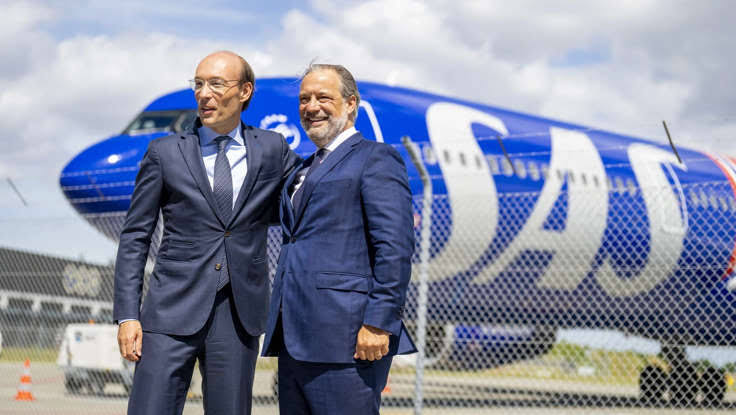
Commenting on the announcement, Anko van der Werff, President and Chief Executive Officer of SAS, described the investment as a defining moment in the airline’s history.
“For 80 years, SAS has connected Scandinavia with the world and the world with Scandinavia. Today, we are investing in the next chapter of our story.”
“This is the largest investment in our company’s history and a clear signal of our confidence in the future. At the same time, the analysis we are presenting today demonstrates the broader value of international access. Strong global links create opportunities for businesses, support jobs, attract investment, and strengthen competitiveness across our region.”
Emphasising the broader economic significance of international aviation, van der Werff added:
“Strong international access is a competitive advantage. In a world where investment, talent and opportunity move across borders, well-connected regions are best positioned to succeed. By investing in our future and strengthening our ability to connect Scandinavia with the world, we are helping create lasting value across Denmark, the Öresund region and Scandinavia as a whole.”
Sustainability remains central to expansion
SAS said sustainability will remain a key element of its long-term growth strategy.
Alongside the aircraft investment, the airline announced the signing of a Memorandum of Understanding (MoU) with SkyKraft to explore the future development of electro-Sustainable Aviation Fuel (e-SAF) as part of its transition towards lower-emission aviation.
The initiative complements the environmental benefits offered by the Airbus A330-900neo fleet, which delivers improved fuel efficiency, reduced carbon emissions and lower noise levels compared with earlier-generation aircraft.
The airline continues to collaborate with industry partners on advancing renewable aviation fuels and other technologies that support decarbonisation across commercial aviation.
Implications for air cargo
While the announcement primarily focuses on passenger network expansion, the investment is also expected to strengthen SAS’ cargo capabilities.
Widebody aircraft provide substantial bellyhold cargo capacity, enabling airlines to transport high-value, time-sensitive freight alongside passenger baggage. The introduction of additional long-haul aircraft is therefore likely to enhance cargo connectivity between Scandinavia and key global markets, supporting exporters across sectors including pharmaceuticals, life sciences, seafood, advanced manufacturing and e-commerce.
By expanding its long-haul fleet and reinforcing Copenhagen Airport’s role as a major international hub, SAS is expected to improve freight capacity, increase network flexibility and provide additional opportunities for cargo operators and freight forwarders serving Northern Europe.
As SAS celebrates its 80th anniversary, the record-breaking fleet investment signals a new chapter in the airline’s evolution—one that combines modern aircraft, expanded global connectivity, economic growth and sustainability while strengthening Scandinavia’s position within international passenger and cargo networks.