
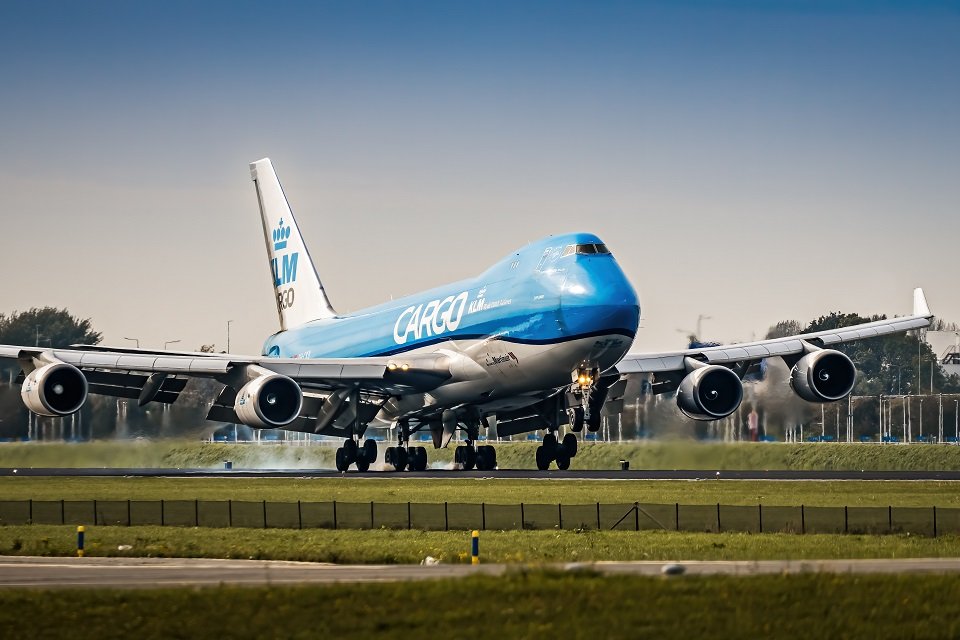
The cargo division of Air France-KLM delivered a mixed performance in the first quarter of 2026, with solid volume growth offset by declining revenues and mounting external pressures, including currency fluctuations and an evolving geopolitical landscape.
Air France KLM Martinair Cargo reported a 3.5% year-on-year decline in cargo revenues to €600 million, despite handling higher shipment volumes during the period. Total cargo volumes increased by 4% to 234,000 tonnes, while cargo traffic rose 3.8% to 1.8 billion revenue tonne kilometres (RTK), reflecting sustained demand across key trade lanes.
Capacity expansion remained measured, rising 2.9% year-on-year. As demand outpaced available capacity, the cargo load factor improved marginally by 0.4 percentage points to 49.4%, indicating more efficient utilisation of available space. However, this operational progress was not sufficient to offset declining yields.
The group attributed the revenue drop partly to a high comparative base in the first quarter of 2025, when air cargo rates surged due to shippers accelerating shipments ahead of anticipated U.S. tariff changes. This “front-loading” effect temporarily boosted pricing last year, creating a tougher benchmark for 2026.
Currency movements also weighed on performance, particularly the weakening of the U.S. dollar over the past year. At constant currency, unit revenues per available tonne kilometre were below prior-year levels in January and February, despite strong underlying demand driven by shifting trade patterns and tariff-related dynamics.
Market conditions shifted in March, when capacity constraints linked to the ongoing Middle East conflict tightened global supply. This disruption supported a short-term rebound in yields and unit revenues, partially mitigating earlier weakness in the quarter.
At the group level, Air France-KLM reported a 4.4% increase in total revenues to €7.5 billion, alongside a significant improvement in operating performance. The operating result narrowed sharply to a loss of €27 million, compared with a €328 million loss in the same period last year, reflecting stronger network performance and disciplined cost management.
The broader network segment, which includes both passenger and cargo operations, emerged as a key driver of improvement, benefiting from higher unit revenues and reduced industry capacity in certain markets. Strategic adjustments, including capacity redeployment and targeted surcharges, enabled the group to respond to geopolitical disruptions with agility.
Despite these gains, the airline faces a substantial cost headwind in the months ahead. The group has warned that its total fuel bill could reach $9.3 billion in 2026—an increase of $2.4 billion compared with the previous year. While the impact was limited in the first quarter due to hedging strategies, a significant portion of the cost increase is expected to materialise from the second quarter onwards.
Management has highlighted fuel as the primary near-term risk, projecting a $1.1 billion impact in the second quarter alone. This comes amid continued geopolitical uncertainty and volatile energy markets, which are expected to influence both operating costs and capacity planning.
Looking ahead, the group remains cautiously optimistic, citing resilient demand, a diversified global network, and ongoing fleet modernisation efforts as key strengths. However, the divergence between volume growth and revenue performance in the cargo segment underscores the continued pressure on yields in an increasingly complex and competitive air freight market.