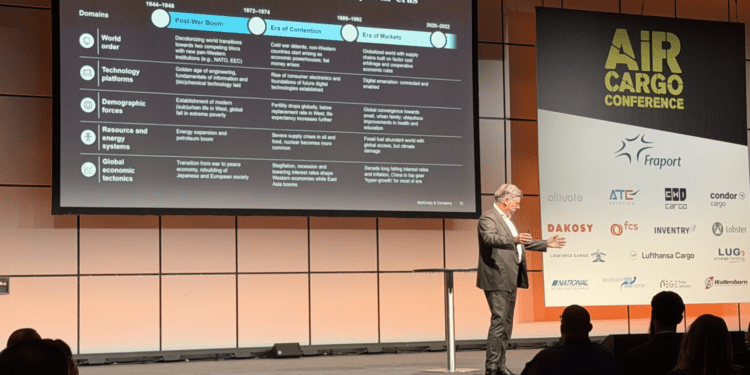


The 2026 edition of LogiPharma 2026 concluded in Vienna with record engagement, drawing more than 2,300 pharmaceutical, biotech, and life sciences supply chain professionals from across the globe. Hosted at the Austria Center Vienna, the event marked a significant evolution in the industry dialogue, shifting from conceptual transformation narratives to practical execution, operational resilience, and measurable value creation.
The relocation to Vienna and the introduction of refreshed session formats were widely viewed as successful, with packed agendas, expanded exhibitor participation, and a notable increase in interactive engagement across all conference tracks. Organisers also pointed to a strengthened pipeline of post-event collaborations and solution deployments, reflecting sustained momentum in the sector.
AI Conversation Matures as Industry Focuses on Practical Value
A defining theme of LogiPharma 2026 was the continued prominence of artificial intelligence in supply chain discourse, albeit with a marked shift in tone.
According to Event Director Ben Sharples, discussions around AI have matured significantly, moving away from speculative expectations toward grounded assessments of current capability and operational limitations.
“AI dominated the conversation again this year, but the tone was far more grounded,” Sharples said. “There’s a growing realism about what the technology can deliver right now, as well as where its limitations still lie.”
Survey insights shared during the event underscored this cautious perspective. Half of respondents indicated that AI tools had provided no meaningful support during recent Middle East disruptions, highlighting a persistent gap between technological ambition and operational impact in crisis conditions.
End-to-End Visibility Emerges as Critical Priority
One of the most consistent takeaways from the conference was the growing emphasis on true end-to-end supply chain visibility as a foundational requirement for resilience.
Industry participants repeatedly stressed that fragmented data systems and limited real-time tracking capabilities remain major barriers to effective disruption management, particularly in global pharmaceutical distribution networks.
While AI-enabled solutions continue to gain traction, speakers emphasised that poor data quality remains a core structural issue undermining digital transformation efforts across the sector.
Organisational Alignment and Cultural Barriers in Focus
Another key theme was the increasing convergence between supply chain and commercial functions within life sciences organisations.
Companies are placing greater emphasis on aligning operational decisions with broader business objectives, including market expansion, revenue growth, and patient access outcomes.
However, discussions also highlighted that technological investment alone is insufficient without corresponding cultural and organisational change.
Sharples noted that human factors remain decisive in determining success or failure in digital transformation programmes.
“Even the best technology won’t deliver if it’s in the wrong hands,” he said. “Digital transformation is still, at its core, a people and change challenge.”
AI Control Towers Positioned as Next Operational Layer
Looking ahead, AI-enabled control towers emerged as a key area of focus, increasingly viewed as the central coordination layer for modern pharmaceutical supply chains.
These systems are evolving beyond traditional monitoring functions to provide predictive insights, scenario modelling, and proactive disruption management capabilities.
Industry stakeholders described this shift as a move from reactive recovery models toward anticipatory supply chain orchestration, particularly in temperature-sensitive and high-value pharmaceutical logistics.
Exhibitor Innovation Reflects Practical Supply Chain Priorities
The expanded exhibition zone at LogiPharma 2026 showcased a strong pipeline of applied technologies focused on resilience, sustainability, and cold chain integrity.
Jake Brown, Commercial Lead at LogiPharma, highlighted the importance of interactive engagement formats and experiential demonstrations in enhancing industry collaboration.
“Exhibitors used LogiPharma as a platform to launch and showcase next-generation technologies aimed at improving resilience, reducing risk, balancing cost and sustainability, and strengthening cold chain integrity,” Brown said.
Among key announcements, supply chain visibility specialist TransVoyant introduced its new “Risk in Motion” platform, designed to aggregate multi-source data inputs and identify disruption risks in real time, enabling proactive intervention for high-value shipments.
In cold chain innovation, Peli BioThermal unveiled a new SmartCap solution for DV10 dewars, aimed at improving monitoring and reliability for advanced therapies such as cell and gene treatments.
Sustainable packaging developer Woolcool introduced its LifeGUARDIAN® system, a fully passive thermal box capable of maintaining temperature stability for up to 120 hours using a multi-layer insulation design that eliminates the need for active cooling systems.
Start-up Innovation and Sustainability in Focus
Emerging technology companies also featured prominently, with Tapp recognised as Start Up Village Champion for its approach to simplifying temperature-controlled shipment management.
The company’s solution focuses on reducing electronic waste while enabling instant shipment data access without additional hardware requirements, reflecting broader industry interest in sustainable, low-friction digital tools.
Collaboration and Cultural Exchange Reinforce Industry Connectivity
Beyond technology showcases, the event emphasised the importance of partnership, trust, and cultural exchange in global supply chain operations.
One notable moment included a traditional Kagami Biraki sake barrel ceremony hosted by Yusen Logistics, symbolising collaboration and shared intent across international partners.
High Engagement Reflects Industry Urgency
Delegates submitted 321 questions through the event application platform, reflecting strong participation levels and a clear appetite for direct, practical dialogue.
Across both Supply Chain and Logistics tracks, sessions incorporated live polling, peer-to-peer discussions, and interactive debate formats, reinforcing the event’s shift toward applied learning and real-world problem-solving.
Outlook: From Digital Ambition to Operational Reality
The overall narrative emerging from LogiPharma 2026 points to a sector transitioning from technology-led ambition to execution-driven maturity.
While digital transformation remains central to strategic planning, the emphasis is increasingly on data quality, organisational alignment, and operational resilience rather than standalone technological deployment.
As pharmaceutical supply chains continue to face geopolitical uncertainty, regulatory complexity, and rising service expectations, the focus is expected to remain on building systems that are not only intelligent, but also robust, transparent, and operationally dependable.