
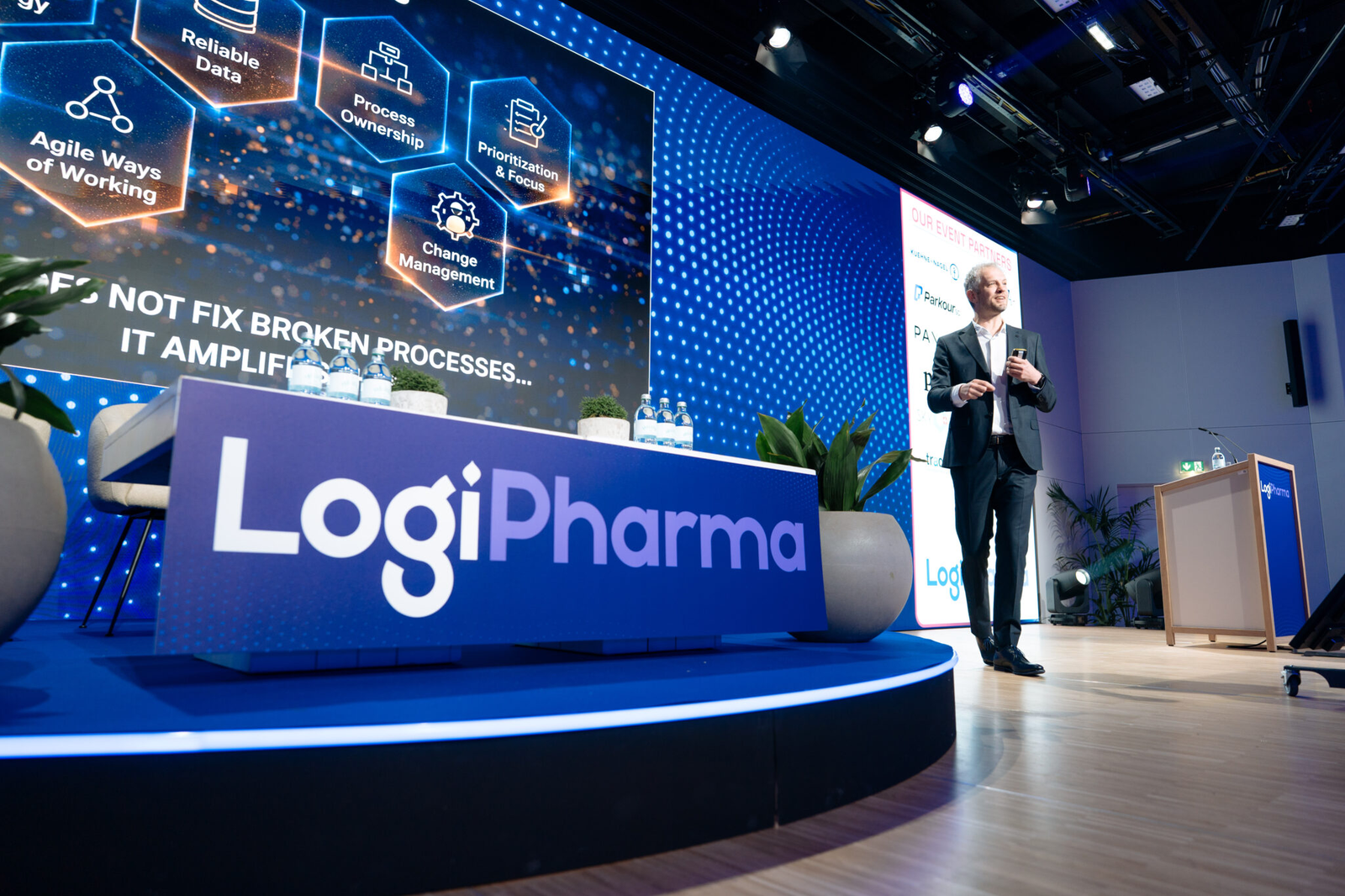
The pharmaceutical supply chain is entering a new phase defined less by efficiency optimisation and more by systemic uncertainty. At LogiPharma 2026 in Vienna, where more than 2,300 industry professionals gathered, the central narrative was clear: traditional reactive logistics models are no longer sufficient in an era shaped by geopolitical shocks, climate pressures, cost inflation and accelerating technological change.
Across three days of discussions, case studies and product launches, one underlying theme dominated: resilience is no longer a strategic advantage, but a baseline requirement.
From disruption response to preparedness culture
In a keynote addressing risk management in healthcare logistics, DHL Global Forwarding chief executive Oscar de Bok underscored a structural shift in mindset across the industry.
Related Post




While organisations have historically focused on responding quickly to disruptions, he argued that this is no longer adequate in a world where instability has become persistent rather than episodic.
The COVID-19 pandemic, he noted, exposed the limitations of centralised decision-making in global healthcare logistics. Instead, he pointed to decentralised empowerment and rapid local decision authority as essential components of continuity planning, particularly in critical pharmaceutical flows where delays directly impact patient outcomes.
Network design under pressure: resilience by architecture
A recurring conclusion across multiple sessions was that supply chain networks built for cost efficiency and predictable trade flows are increasingly misaligned with current global conditions.
Panel discussions featuring representatives from major pharma and logistics organisations, including Kuehne+Nagel, Novo Nordisk, Norgine and consulting firms, emphasised that volatility is now structural rather than exceptional.
The concept of “resilience by design” emerged as a guiding principle. Rather than retrofitting resilience into existing systems, companies are increasingly redesigning networks using scenario modelling, digital twins and continuous replanning tools to anticipate disruption.
A key takeaway was the reframing of disruption itself. What were once considered rare “black swan” events are now better understood as overlapping and interacting shocks — a “polycrisis” environment where geopolitical, economic and environmental risks reinforce each other.
Geopolitics reshaping global pharma logistics
The geopolitical keynote delivered at the event further reinforced concerns over long-term instability. The analysis of shifting global power structures and ongoing conflicts highlighted a central challenge for supply chain leaders: uncertainty is not cyclical, but enduring.
Industry leaders were urged to develop structured crisis playbooks covering conflict, cyber risk and climate-related disruptions, with particular emphasis on stress testing supply continuity under multiple simultaneous failure scenarios.
The message was unambiguous: assuming a return to pre-pandemic normality is no longer viable.
Transparency becomes a competitive requirement
Operational transparency also emerged as a defining performance factor. In a case study presented by Cathay Cargo, real-time visibility systems for cold chain shipments were shown to play a critical role in maintaining trust during operational disruptions.
A shipment of temperature-sensitive pharmaceutical cargo from Frankfurt to Shanghai was delayed due to a sudden labour strike at a handling partner. However, early and transparent communication with the shipper enabled contingency planning, preventing escalation and maintaining product integrity.
The incident underscored a broader shift: transparency is no longer a customer service differentiator, but a compliance and risk mitigation necessity in pharmaceutical logistics.
Sustainability and circularity move into operational focus
Sustainability discussions moved beyond reporting frameworks into practical implementation. Packaging circularity, reverse logistics and reusable systems were central themes, with companies highlighting structural barriers such as fragmented data systems and resistance to operational change.
In parallel, emerging packaging technologies and reusable cold chain systems were presented as commercially viable alternatives to single-use models, particularly as regulatory pressure increases across Europe.
Data, AI and the shift from reactive to predictive logistics
Artificial intelligence remained one of the most discussed topics, but with a noticeable shift in tone. Rather than speculative ambition, the focus was on operational deployment and measurable outcomes.
Across multiple sessions, including an AI-focused town hall, speakers emphasised that AI should not be treated as a standalone strategy, but as an enabler built on strong data foundations and clearly defined use cases.
A key limitation identified across the industry is data quality. Without structured, reliable datasets, even advanced models fail to deliver consistent value in mission-critical logistics environments.
This gap is increasingly shaping investment priorities, particularly in pharmaceutical cold chain monitoring where predictive analytics is expected to reduce costly temperature excursions.
Cold chain innovation targets predictive capability
In the cold chain segment, monitoring technology providers demonstrated how integrated data platforms are evolving from compliance tools into predictive systems.
The focus is shifting from documenting temperature excursions after they occur to forecasting and preventing them through real-time risk modelling.
Industry estimates shared during the event highlighted the scale of the challenge, with billions lost annually due to cold chain failures. This has accelerated interest in AI-driven systems capable of identifying high-risk lanes, facilities and handling points before shipments are dispatched.
Air-to-ocean shift reflects cost and sustainability pressures
Another structural shift discussed extensively was the gradual transition from air to ocean freight in pharmaceutical logistics.
While air transport remains essential for urgent and high-value medicines, particularly in oncology and clinical trials, companies are increasingly shifting baseline volumes to sea freight to reduce costs and emissions exposure.
However, this transition introduces new trade-offs in lead time and supply chain responsiveness, reinforcing the need for hybrid transport strategies rather than single-mode dependence.
From efficiency to resilience economics
The overarching conclusion from LogiPharma 2026 is that pharmaceutical supply chains are undergoing a fundamental recalibration. Efficiency remains important, but no longer defines success on its own.
Instead, resilience — in network design, data architecture, transport flexibility and decision-making structures — is emerging as the dominant performance metric.
In a logistics environment shaped by geopolitical fragmentation, technological acceleration and persistent disruption, the industry’s centre of gravity is shifting decisively from optimisation to adaptability.