
New AI-enabled cargo terminal strengthens global connectivity, accelerates cross-border e-commerce flows, and establishes a blueprint for next-generation air cargo handling
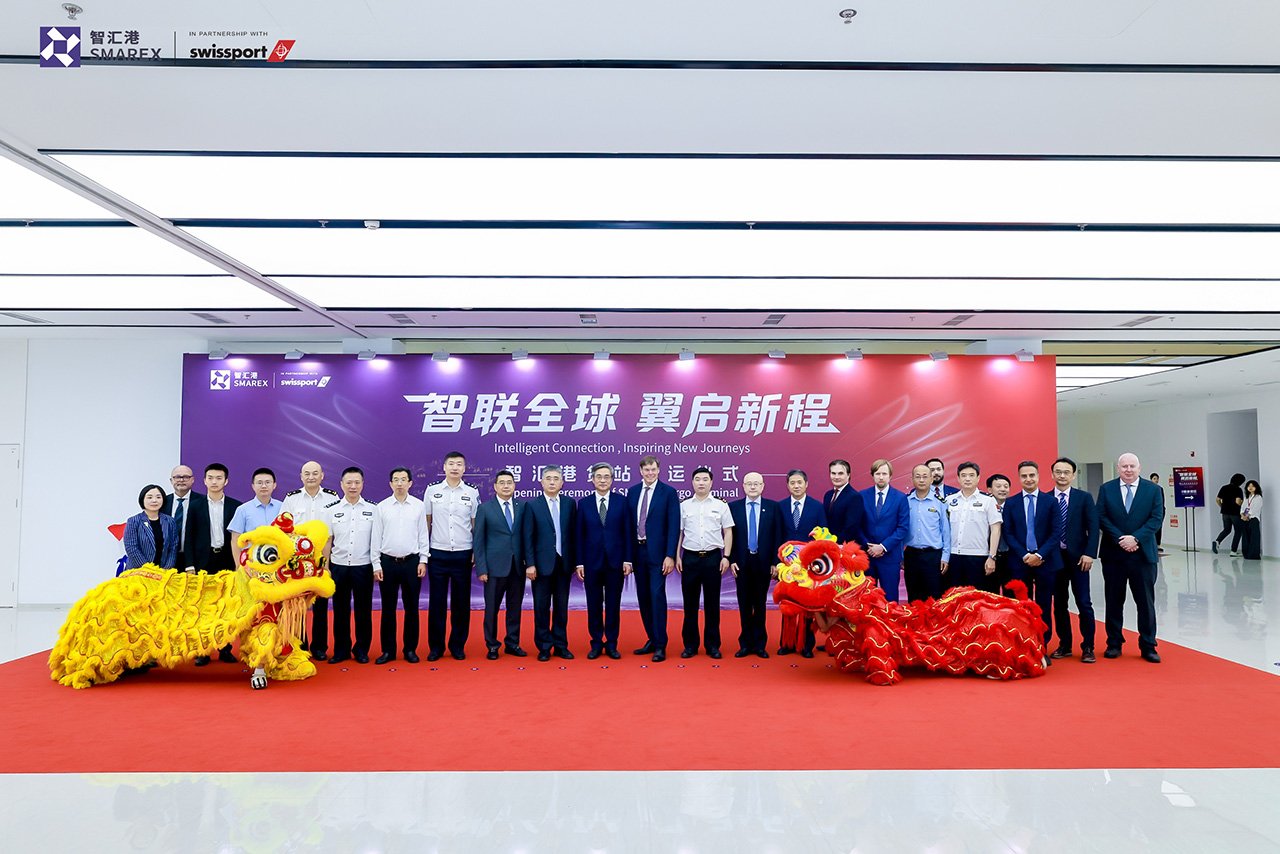
Swissport International has officially launched cargo operations at the Digital & Intelligent International Cargo Terminal at Shanghai Pudong International Airport, marking its entry into the Chinese market and a significant milestone in its Asia growth strategy. The move positions the global aviation services provider at the centre of one of the world’s fastest-growing cross-border e-commerce ecosystems while introducing advanced automation, AI-enabled cargo management, and integrated global logistics capabilities to one of the world’s busiest air freight gateways.
Swissport Establishes Strategic Presence in China’s Air Cargo Market
Swissport International, one of the world’s leading providers of airport ground services and air cargo handling solutions, has commenced operations at Shanghai Pudong International Airport (PVG), strengthening its global cargo network and expanding its footprint into one of the most strategically important logistics markets worldwide.
Related Post




The launch marks Swissport’s first operational presence in mainland China and represents a major step in the company’s long-term Asia-Pacific growth strategy. Shanghai Pudong, widely recognised as the world’s second-largest air cargo hub, handles approximately four million tonnes of freight annually and serves as a critical gateway for international trade, manufacturing exports, and cross-border e-commerce flows.
The new operation is being conducted through a strategic partnership with Smarex, a joint venture established between AVINEX Logistics, the logistics arm of the Shanghai Airport Authority, and China Eastern Airlines Logistics.
The collaboration combines Swissport’s global cargo handling expertise, operational standards, and extensive international network with Smarex’s advanced digital infrastructure and deep understanding of the Chinese logistics market.
A Milestone Year for Swissport’s Global Expansion
The launch comes during Swissport’s 30th anniversary year and further reinforces the company’s ambition to expand its presence across high-growth international markets.
Commenting on the development, Warwick Brady, President and Chief Executive Officer of Swissport International, described the Shanghai operation as a defining moment for the company’s future growth strategy.
“Launching operations at Shanghai Pudong International Airport is a defining moment for Swissport in Asia and globally,” Brady said.
He noted that the partnership brings together Swissport’s international operational expertise with advanced AI-enabled infrastructure and intelligent logistics systems to create a new benchmark for cargo handling excellence.
Brady emphasized that the initiative places Swissport at the forefront of the rapidly expanding cross-border e-commerce sector, enabling Chinese exporters to connect more efficiently with consumers and businesses around the world through Swissport’s extensive international cargo network.
Strengthening Global Air Cargo Connectivity
One of the most significant advantages of the new operation is its integration into Swissport’s worldwide network, which currently spans more than 312 airports across 49 countries.
The Shanghai facility will provide direct connectivity to major cargo gateways across North America, Europe, Latin America, Africa, the Middle East, and Asia-Pacific, creating seamless international trade corridors for importers, exporters, airlines, and freight forwarders.
Key destinations connected through the network include New York, Miami, Liège, Zurich, Amsterdam, and major airports across the United Kingdom.
According to Swissport, enhanced operational integration and standardized handling processes will enable shipments to reach key international markets up to two days faster than previous routing options, improving supply chain efficiency and service reliability.
For freight forwarders and logistics providers, the enhanced connectivity offers greater flexibility in managing global cargo flows while reducing transit times across critical trade lanes.
Capitalising on China’s Cross-Border E-Commerce Boom
The strategic significance of the Shanghai operation is closely linked to the continued expansion of China’s e-commerce economy.
China remains the world’s largest online retail market, accounting for more than 45% of global e-commerce transactions. Demand for Chinese-manufactured goods continues to rise internationally, driving sustained growth in cross-border e-commerce shipments and increasing reliance on air freight services.
Industry analysts estimate that China’s cross-border e-commerce sector continues to expand at double-digit annual growth rates, supported by digital trade platforms, integrated supply chains, and growing consumer demand in overseas markets.
The new Swissport-Smarex facility has been specifically designed to support these evolving market dynamics, providing the speed, scalability, and efficiency required by modern e-commerce supply chains.
Advanced Infrastructure Designed for High-Volume Cargo Growth
The Digital & Intelligent International Cargo Terminal spans approximately 144,000 square metres and has been purpose-built to accommodate rising cargo volumes while supporting faster customs clearance and shipment processing.
A key feature of the facility is its innovative “inspect-first, then-deliver” customs model, which streamlines cargo movement and accelerates the release of international shipments.
The terminal also incorporates high-speed automated sorting systems operating across four loop lines, enabling rapid processing of large shipment volumes while maintaining operational accuracy and visibility.
The infrastructure is expected to play a critical role in managing growing e-commerce traffic while supporting more efficient cargo handling for airlines and logistics providers.
Expanded Cold Chain Capabilities Strengthen Pharmaceutical Logistics
Beyond e-commerce, the facility significantly enhances Shanghai’s capabilities in temperature-sensitive logistics.
The terminal includes approximately 15,000 square metres of dedicated cold chain infrastructure capable of handling cargo across temperature ranges from -60°C to +25°C.
This specialised environment supports the transportation of pharmaceuticals, biotechnology products, perishables, and other sensitive cargo requiring strict temperature control throughout the logistics chain.
Continuous 24/7 monitoring systems, combined with internationally recognised handling standards, are designed to ensure cargo integrity and compliance with stringent pharmaceutical logistics requirements.
The investment reflects growing demand for advanced healthcare logistics solutions, particularly as global pharmaceutical supply chains become increasingly dependent on reliable air freight services.
AI and Automation Drive Next-Generation Cargo Operations
A defining feature of the Shanghai operation is its extensive use of artificial intelligence, automation, and digital cargo management technologies.
The facility leverages integrated operational platforms that provide real-time visibility, cargo tracking, predictive decision-making, and automated workflow optimisation.
AI-enabled systems continuously analyse cargo flows, resource allocation, and handling processes to improve efficiency, reduce bottlenecks, and support operational decision-making.
The terminal is also fully electrified, supporting the sustainability objectives shared by Swissport and Smarex while contributing to broader industry efforts to reduce the environmental footprint of ground handling operations.
These capabilities position the facility among the most technologically advanced cargo terminals currently operating in the global air freight sector.
Building a Blueprint for the Future of Smart Cargo Handling
Brad Moore, Chief Executive Officer of Swissport Asia Pacific, believes the operation will play a significant role in shaping the future of global cargo logistics.
“Shanghai Pudong International Airport already handles around four million tonnes of freight each year. Now, plugged into our global network, we expect volumes to grow by around 8 to 10 per cent over the coming years as connectivity and efficiency improve across key trade corridors,” Moore said.
He added that the combination of intelligent infrastructure, integrated logistics processes, and global connectivity creates a powerful platform for future growth as demand for international e-commerce and air cargo services continues to accelerate.
Beyond operational performance, the Swissport-Smarex partnership is expected to serve as a model for future smart cargo terminals worldwide. By integrating local logistics expertise with international cargo handling standards and advanced digital technologies, the facility establishes a blueprint that could be replicated across other strategic cargo hubs within Swissport’s global network.
As air cargo continues its digital transformation, the Shanghai Pudong operation represents a significant step forward in the evolution of intelligent, connected, and sustainable cargo logistics.