

Demonstration flight highlights growing role of regional airports in advancing low-emission cargo aviation across Europe
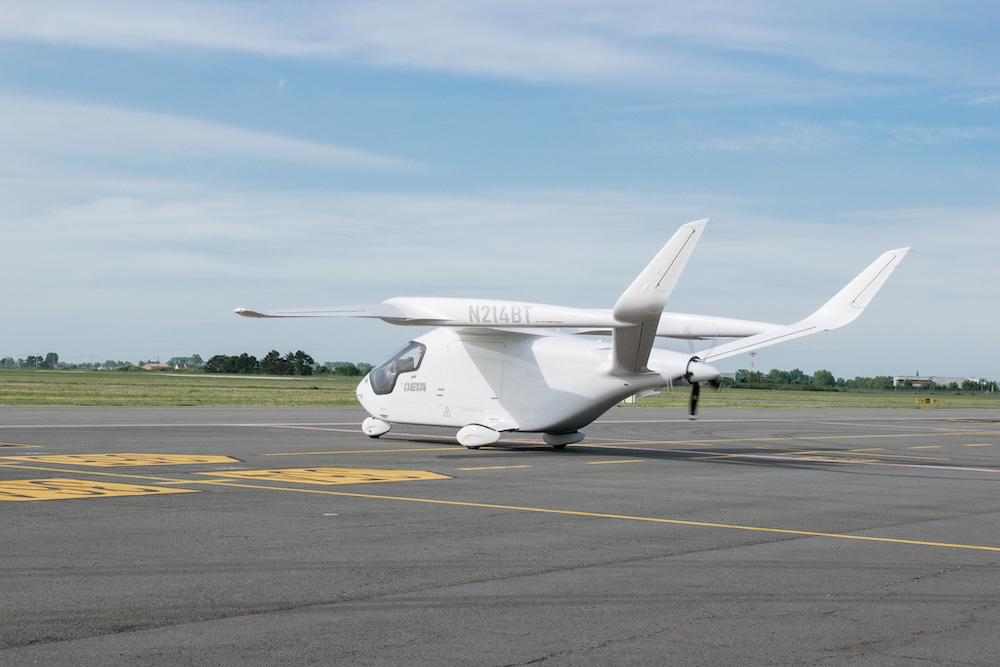
Ostend-Bruges Airport has welcomed its first fully electric cargo aircraft, marking a significant milestone in the evolution of sustainable air freight operations in Europe. The demonstration flight, conducted as part of a series of operational test flights across the Benelux region, underscores the strategic role regional airports can play in accelerating the adoption of low-emission aviation technologies. The initiative is expected to pave the way for future applications in critical cargo transport, medical logistics, e-commerce distribution, and eventually regional passenger services.
Electric Cargo Flight Demonstrates Future of Regional Air Logistics
In a landmark development for sustainable aviation and air cargo innovation, Ostend-Bruges Airport has hosted its first fully electric cargo aircraft, becoming one of the latest European airports to participate in real-world testing of next-generation electric aviation technologies.
Related Post




The aircraft’s stopover at the NSAC Business Terminal formed part of a broader programme of operational test flights being conducted across the Benelux region. The initiative is being jointly supported by Ostend-Bruges Airport and Antwerp Airport as part of a long-term strategy to position regional aviation hubs at the forefront of aviation decarbonisation.
The demonstration reflects growing industry efforts to develop environmentally sustainable alternatives to conventional air transport while maintaining the speed and reliability that are essential to modern logistics networks.
Regional Airports Positioned as Innovation Hubs
Industry experts increasingly view regional airports as ideal testing grounds for emerging aviation technologies due to their operational flexibility, available infrastructure, and lower congestion levels compared to major international hubs.
Nathan De Valck, Chief Executive Officer of Ostend-Bruges Airport and Antwerp Airport, emphasized the strategic importance of regional airports in supporting aviation’s sustainability transition.
“Regional airports like Ostend-Bruges and Antwerp have the necessary space and operational flexibility required to thoroughly test and further scale up new technologies such as electric flying,” said De Valck.
“In this way, we can and want to play a pioneering role in making the aviation sector more sustainable.”
The initiative aligns with broader European Union and aviation industry objectives aimed at reducing carbon emissions while maintaining connectivity across regional markets.
New Opportunities for Regional Air Cargo Networks
The emergence of electric aviation is expected to reshape regional air transport over the coming decade, particularly on shorter routes where battery-powered and hybrid-electric aircraft are likely to be commercially viable first.
Current aircraft concepts under development are designed to efficiently connect secondary cities, regional business centres, and logistics hubs within a range of approximately 500 to 1,000 kilometres.
This operational profile creates significant opportunities across Western Europe, where densely populated economic corridors offer strong demand for rapid cargo transportation.
According to De Valck, the geographical location of Ostend-Bruges and Antwerp airports places them in an advantageous position to benefit from the growth of electric aviation.
“Our airports are located in the economic heart of Western Europe. The Netherlands, France, Germany, the United Kingdom and Luxembourg are all within easy reach,” he noted.
For logistics providers, the development could create new regional air cargo corridors that combine speed, sustainability, and operational efficiency.
Medical Logistics and Time-Critical Cargo Expected to Lead Adoption
While widespread deployment of electric cargo aircraft remains several years away, industry stakeholders believe the earliest commercial applications will focus on specialised logistics segments where speed and reliability outweigh payload limitations.
Among the most promising use cases are the transportation of organs for transplantation, urgent pharmaceutical shipments, medical supplies, and other life-critical cargo.
Electric aircraft are also expected to support the growing demand for rapid movement of high-value and small-scale shipments, including premium e-commerce products, technology components, and specialised industrial goods.
By focusing initially on these niche sectors, operators can establish viable business models while battery technology and aircraft capabilities continue to mature.
The approach mirrors broader trends within sustainable aviation, where early adoption is expected in sectors requiring shorter-range operations and lower payload capacities.
Pathway Toward Broader Commercial Applications
Industry forecasts suggest that advances in battery density, propulsion systems, and aircraft design could significantly expand the capabilities of electric aircraft over the next several years.
As technology matures, electric aviation is expected to move beyond cargo-only operations and begin serving regional passenger markets and corporate aviation segments.
“We expect the technology to be ready for a broader rollout within a few years, allowing regular passenger transport and business aviation to launch as well,” De Valck said.
For airports, airlines, and logistics operators, the transition represents both a sustainability opportunity and a potential transformation of regional connectivity models.
Sustainability Driving Air Cargo Innovation
The successful demonstration at Ostend-Bruges Airport reflects a broader shift within the aviation and logistics sectors toward sustainable transport solutions.
As regulators, customers, and investors increasingly focus on environmental performance, airlines and cargo operators are exploring multiple pathways to reduce emissions, including sustainable aviation fuel (SAF), hydrogen propulsion, and electric aircraft technologies.
While large-scale electric operations remain in the developmental stage, demonstration flights such as the one conducted in Belgium provide valuable operational data and help build the ecosystem required for future commercial deployment.
For the air cargo industry, the arrival of electric aircraft signals the beginning of a new era in regional logistics—one where sustainability, innovation, and operational efficiency increasingly converge.
As testing progresses across Europe and beyond, regional airports are expected to play a critical role in shaping the future of low-emission air freight and next-generation aviation networks.