
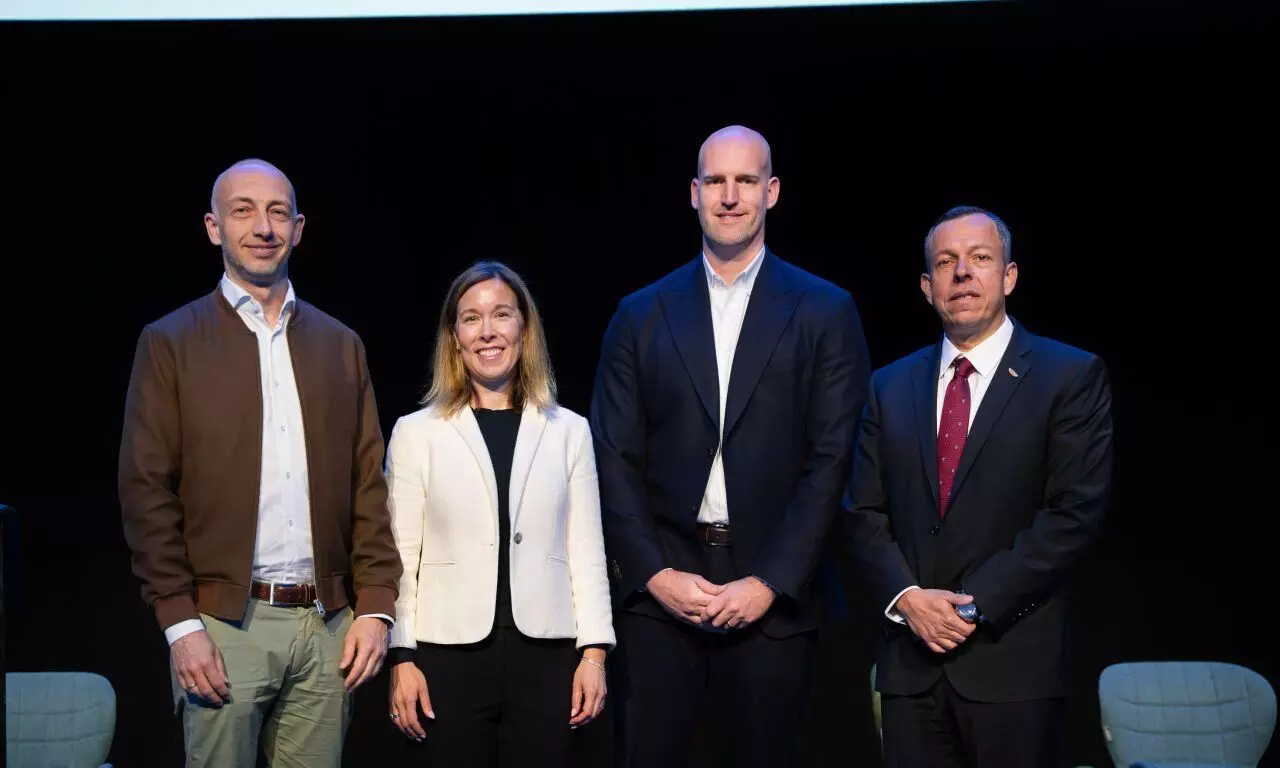
A major cross-industry collaboration is reshaping the pathway to lower-emission air cargo operations, as DSV joins forces with United Airlines, Microsoft, and Phillips 66 to unlock access to 11 million gallons of Sustainable Aviation Fuel (SAF).
The agreement marks a significant milestone in the aviation sector’s decarbonisation efforts. According to United Airlines, it represents the largest contracted SAF supply deal with a single customer—DSV—within the airline’s Eco-Skies Alliance programme, underscoring the growing role of coordinated value-chain partnerships in accelerating sustainable fuel adoption.
At the core of the arrangement is an innovative “book-and-claim” model, designed to overcome one of the biggest barriers to SAF scalability: physical access. While United Airlines will directly utilise the fuel in its operations, DSV and Microsoft will account for associated emissions reductions without taking physical delivery. This mechanism allows companies to support SAF deployment and claim verified carbon reductions irrespective of geographic fuel constraints.
Related Post
The collaboration brings together demand generation, supply infrastructure, and operational execution—an alignment that industry observers view as essential for scaling SAF usage globally. By aggregating requirements across logistics providers, airlines, corporate customers, and fuel producers, the initiative demonstrates how long-term agreements can be structured to deliver both environmental and commercial outcomes.
Frank Sobotka, CEO of Air & Sea at DSV, emphasised the strategic importance of such partnerships in translating sustainability ambitions into measurable action. He noted that by connecting stakeholders across the supply chain, the company is enabling broader access to low-emission transport solutions at scale.
The integrity of the SAF transaction is underpinned by robust certification and tracking frameworks. The fuel supply chain is verified through the International Sustainability and Carbon Certification system, ensuring that the SAF is produced from sustainable feedstocks and handled through audited processes. Oversight is further strengthened by the Sustainable Aviation Fuel Certificate Registry, which tracks environmental attributes and allocates emissions reductions transparently.
In parallel, DSV’s internal registry system works alongside SAFc Registry mechanisms to ensure precise accounting of carbon reductions. This enables detailed verification of each tonne of CO₂ emissions avoided and its attribution to specific customers—an increasingly critical requirement for corporate sustainability reporting.
Lauren Riley, Chief Sustainability Officer at United Airlines, highlighted the scale of the agreement, noting that it demonstrates the potential for meaningful greenhouse gas reductions when stakeholders across the aviation ecosystem collaborate effectively.
The environmental impact of the initiative is substantial. The use of 11 million gallons of SAF is expected to reduce lifecycle greenhouse gas emissions by approximately 100,000 tonnes compared to conventional jet fuel. This reduction is roughly equivalent to eliminating emissions from one freighter flight per day over the course of a year—an impactful benchmark in the air cargo sector.
From a technology and logistics standpoint, Microsoft’s involvement reflects growing demand among multinational corporations to decarbonise supply chains, particularly within cloud infrastructure logistics. The company reaffirmed its commitment to reducing emissions across its operations through strategic partnerships that accelerate SAF adoption.
Meanwhile, Phillips 66 brings critical production and distribution capabilities to the initiative. Leveraging its integrated energy infrastructure and logistics network, the company aims to deliver SAF at scale in the near term, bridging the gap between market demand and fuel availability.
The agreement stands as a compelling example of how collaborative frameworks—spanning fuel producers, airlines, logistics providers, and end customers—can transform sustainability commitments into tangible outcomes. As regulatory pressures and corporate climate targets intensify, such models are likely to play a defining role in the future of aviation decarbonisation.