
Air connectivity between the United States and the Middle East has contracted sharply in the wake of escalating geopolitical tensions, with significant implications for both passenger travel and global air cargo flows. According to new analysis by Mabrian in partnership with The Data Appeal Company, seat capacity across this critical long-haul corridor has declined by 59.1 percent since the onset of the crisis.
The study highlights a substantial reduction in services linking 14 major U.S. airports with key destinations across the Middle East, reflecting widespread route suspensions and capacity adjustments by both U.S. and regional carriers. The scale of the decline underscores the aviation sector’s vulnerability to geopolitical instability, particularly on intercontinental routes that rely on complex operational and regulatory frameworks.
Among Middle Eastern carriers, Qatar Airways recorded the steepest drop, with seat availability from the United States falling by 60.5 percent. Other major operators also reported notable declines, including Royal Jordanian at 23.7 percent, Emirates at 21 percent, and Etihad Airways at 18.4 percent.
Related Post


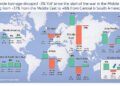
The disruption is not confined to North America. In Latin America, capacity reductions have also been recorded, particularly on routes connecting Brazil to the Middle East. Emirates services from São Paulo and Rio de Janeiro to Dubai declined by 10.2 percent, while Qatar Airways’ São Paulo–Doha route saw a sharp 57.9 percent drop. Meanwhile, Turkish Airlines reported a comparatively modest 2.3 percent reduction on its São Paulo–Istanbul service.
Mexico has experienced a more limited impact, with capacity on its sole direct Middle East connection—operated by Turkish Airlines—falling by 3.2 percent. Despite this relatively smaller decline, the data points to a broader trend of network recalibration across long-haul markets affected by geopolitical uncertainty.
Mabrian noted that the sharp contraction in seat capacity illustrates the sensitivity of global aviation networks to external shocks, particularly along strategic intercontinental corridors linking the Americas with the Middle East.
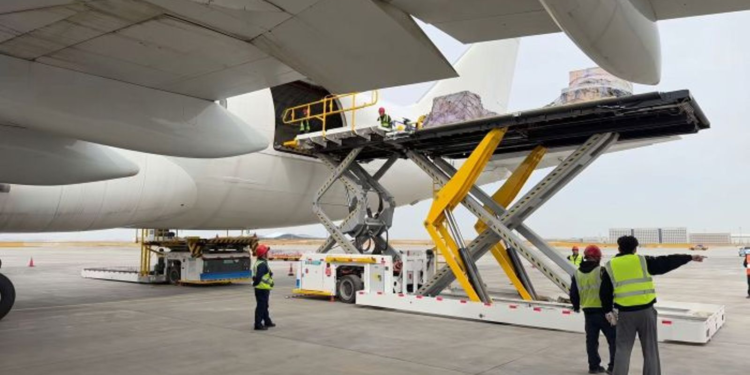
Beyond passenger travel, the reduction in available seats is expected to have a direct impact on air cargo operations. With fewer flights operating and network frequencies reduced, bellyhold cargo capacity—a critical component of global freight movement—is also declining. This is likely to tighten available space on key trade lanes, potentially driving up freight rates and affecting supply chain reliability.
As airlines continue to adjust their networks in response to evolving geopolitical risks, the broader aviation and logistics ecosystem faces mounting pressure to adapt to reduced connectivity and shifting capacity dynamics across some of the world’s most important air corridors.