
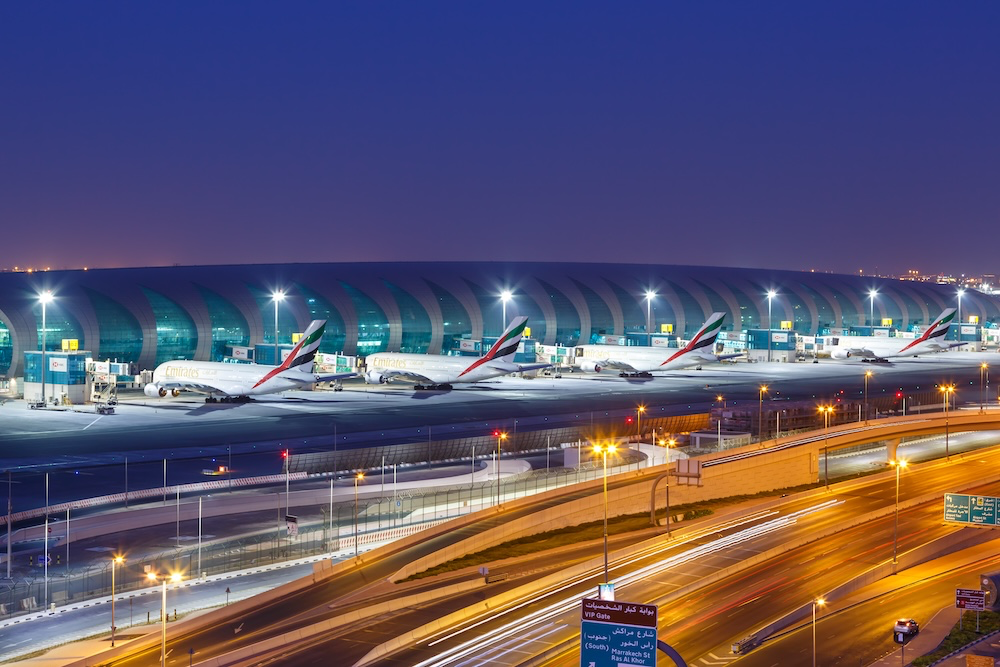
Dubai’s airport system has underscored its operational resilience amid recent regional airspace disruptions, sustaining both passenger and cargo flows through coordinated contingency measures and rapid tactical response.
During a period of heightened geopolitical tension that led to intermittent airspace restrictions across the UAE, airport authorities implemented dynamic airspace management in close coordination with the General Civil Aviation Authority. This approach enabled controlled closures and reopenings of flight corridors, ensuring that aircraft could be rerouted safely while maintaining a degree of operational continuity.
At the core of the response was the ability to keep aircraft moving. By avoiding prolonged ground holds and instead directing traffic through designated aerial corridors, Dubai’s aviation system minimized cascading disruptions across global networks. This distinction proved critical for cargo operators, where even minor delays can escalate into significant supply chain bottlenecks—particularly for time-sensitive shipments such as pharmaceuticals, perishables, and high-value electronics.
Related Post

Both Dubai International Airport (DXB) and Al Maktoum International Airport (DWC) adapted operations to absorb the impact. While DXB—one of the world’s busiest international hubs—managed constrained passenger capacity, DWC provided additional flexibility as a logistics-centric platform, supporting cargo movements less dependent on passenger connectivity.
Despite the disruptions, the system maintained throughput at a reduced but stable level. Over a 17-day period, more than one million passengers were processed, reflecting the scale at which operations continued even under constrained conditions. Current traffic volumes are estimated at approximately 40–45 percent of normal levels, with recovery progressing steadily.
Industry leadership has expressed confidence in a rapid return to full capacity. Paul Griffiths, CEO of Dubai Airports, emphasized that the agility of the response—combined with clear communication and strict adherence to safety protocols—has been instrumental in maintaining operational stability and customer confidence.
The focus has now shifted toward clearing accumulated backlogs and restoring schedule integrity. Disruptions of this nature tend to ripple through global aviation networks, affecting aircraft rotations, crew availability, and cargo transfer windows. In response, airport teams have prioritized aircraft sequencing, stand allocation, and ground handling efficiency to normalize throughput while maintaining safety margins.
For the cargo sector, preserving flow integrity within Dubai’s hub-and-spoke model remains paramount. The emirate’s reliance on long-haul widebody aircraft—critical for both passenger and bellyhold freight capacity—means that even partial continuity plays a decisive role in stabilizing supply chains.
As recovery accelerates, Dubai’s aviation ecosystem is positioning itself to restore full operational capacity swiftly, reinforcing its role as a critical global transit hub while maintaining safety, efficiency, and stakeholder confidence.