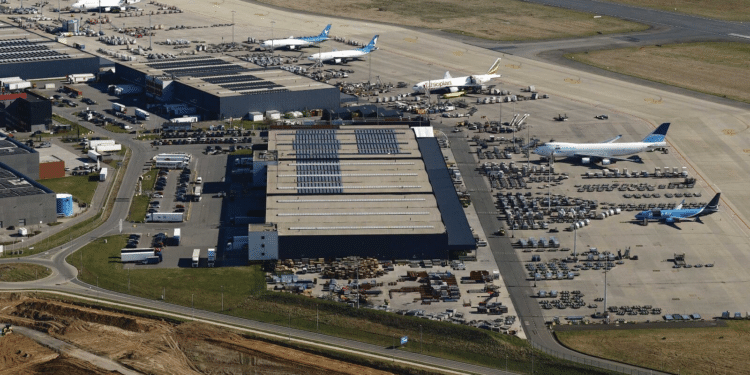


Centralny Port Komunikacyjny (CPK) has signed a major contract for the next phase of cargo infrastructure development at Poland’s future flagship airport, marking another significant milestone in one of Europe’s largest and most closely monitored transport projects.
The agreement, awarded to Przedsiębiorstwo Spółdzielcze Budoprojekt, covers the preparation of design documentation for the Cargo 2 development within the airport’s expanding Cargo Zone. The contract is valued at approximately PLN 8.9 million gross.
The latest signing represents the second of three major agreements planned for the airport’s cargo infrastructure programme, which forms a central component of Poland’s broader Port Polska investment strategy aimed at strengthening the country’s long-term role in European logistics, aviation, and multimodal transport.
Related Post


Cargo 2 to Support Integrators and Express Freight Growth
The Cargo 2 project is designed to support the operational needs of global logistics integrators and express freight operators by creating a highly automated and secure cargo handling environment directly integrated with the airport’s future airside and landside infrastructure.
According to project details released by CPK, the facility will combine warehousing, transshipment, and parcel sorting functions within a unified logistics platform intended to minimise cargo handling times and improve operational efficiency.
The infrastructure is being developed in response to continued growth in global e-commerce, courier services, and time-sensitive airfreight demand, sectors that increasingly rely on high-speed cargo processing and seamless multimodal connectivity.
A key feature of the project will be the strategic positioning of cargo facilities at the interface between airside and landside operations. This configuration is expected to enable rapid cargo transfers between aircraft and ground transport networks, supporting faster shipment flows and improved supply chain performance.
The planned facilities will operate primarily as high-throughput transfer hubs where shipments move rapidly between trucks and aircraft with minimal storage time, an operational model increasingly favoured by integrators and express logistics companies.
Advanced Sorting and Security Infrastructure Planned
The Cargo 2 development will also include a dedicated sorting zone equipped with flexible technological and spatial systems designed to adapt to changing shipment volumes and operational requirements.
Project planners stated that scalability and operational flexibility are key priorities for the facility, allowing future cargo growth to be accommodated without major structural modifications.
Security considerations are also central to the project’s design. The infrastructure will incorporate strict separation between airside and landside zones along with controlled access systems aimed at ensuring secure handling of cargo, vehicles, and personnel throughout the logistics process.
Industry analysts note that such integrated security and cargo flow systems are becoming increasingly important at modern air cargo hubs as operators seek to balance operational speed with evolving international security and customs requirements.
Part of Broader Cargo Infrastructure Programme
The Cargo Zone development has been divided into three separate project packages due to the scale and complexity of the airport investment.
The first Cargo Zone design contract, covering the Cargo 1 component, was previously awarded to Cundall Polska.
According to the current development schedule, the cargo facilities at Centralny Port Komunikacyjny are expected to become operational by the end of 2031.
The broader CPK programme aims to establish Poland as a major aviation and logistics gateway connecting Central and Eastern Europe with global trade corridors through an integrated network of air, rail, and road infrastructure.
Strategic Importance for European Logistics
The continued advancement of the Cargo Zone project highlights Poland’s growing ambitions within the European logistics and air cargo sector.
Industry observers view the future airport as a strategically important infrastructure project that could significantly reshape cargo flows across Central Europe by offering additional capacity for express freight, e-commerce distribution, and international cargo operations.
As global supply chains continue evolving and demand for integrated multimodal logistics infrastructure increases, projects such as Centralny Port Komunikacyjny are expected to play an increasingly important role in supporting regional trade competitiveness and long-term freight growth.