
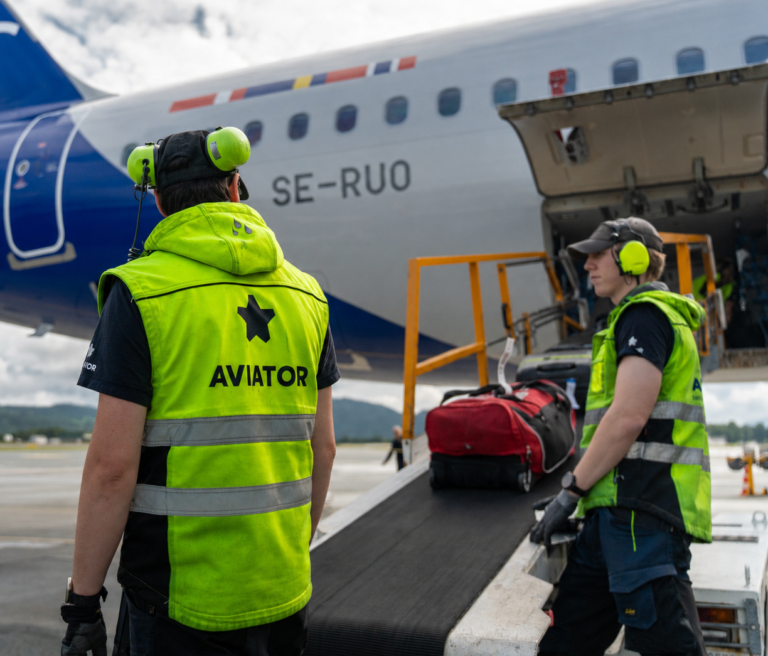
Aviator Airport Alliance, part of Avia Solutions Group, has reported significant progress in its sustainability roadmap, reaching 62 percent electrification of its ground support equipment (GSE) fleet across its network, according to its ESG Report 2025.
The company has also achieved a major operational milestone in Sweden, where its stations at Stockholm Arlanda Airport, Gothenburg Landvetter Airport, and Malmö Airport have transitioned to fossil-free operations. Since 1 December 2025, these stations have been operating on 100 percent renewable electricity combined with renewable fuel (HVO100), marking a key step in the company’s decarbonisation strategy.
Expansion of Renewable Operations Across Nordic Stations
Aviator’s sustainability transformation is also advancing across other Nordic hubs. At Copenhagen Airport, the shift to 100 percent renewable electricity has resulted in a 60 percent reduction in on-site operational emissions, highlighting the impact of clean energy integration on ground handling operations.
Related Post

Meanwhile, at Helsinki Airport, the transition to renewable electricity was completed in the fourth quarter of 2025, laying the foundation for further emissions reductions in 2026 and beyond.
The company’s Nordic-wide progress reflects a coordinated strategy to reduce environmental impact across ground operations while maintaining operational efficiency and service reliability for airline customers.
Sustainable Aviation Fuel Investment and Emissions Reduction
As part of its broader climate strategy, Aviator has also expanded its investment in Sustainable Aviation Fuel (SAF), contributing to the offsetting of approximately 50 percent of Sweden-based business travel emissions.
This initiative forms part of the company’s wider efforts to support the aviation sector’s transition toward lower-carbon operations and to align with emerging environmental standards across Europe’s aviation services industry.
Workforce Development and Operational Performance
Alongside its environmental initiatives, Aviator continues to prioritise workforce development and operational excellence across its network.
In 2025, the company employed more than 3,500 staff across 15 stations in four countries, with continued investment in training programmes, leadership development, and digital tools aimed at enhancing frontline operational efficiency.
The workforce composition reflects a focus on diversity and long-term talent development, with women representing 26 percent of employees and 45 percent of staff under the age of 30.
Operational performance has remained strong, supported by a safety-first culture reinforced through more than 11,000 inspections during the year and a compliance rate exceeding 98 percent. The company has also continued to strengthen reporting practices and safety governance frameworks across all stations.
Strategic Focus on Carbon Neutrality by 2030
Jo Alex Tanem, Chief Executive Officer of Aviator Airport Alliance, said the company remains firmly committed to achieving measurable progress toward carbon neutrality by 2030.
He emphasised that safety, operational excellence, and empowerment of local teams remain central to Aviator’s long-term strategy, alongside environmental responsibility.
Tanem noted that the company’s objective is to reduce the environmental impact of aviation services while maintaining high operational standards and supporting sustainable growth across the aviation ecosystem.
Aviator’s ESG Report 2025 outlines a structured sustainability roadmap integrating environmental, social, and governance priorities into its long-term business strategy. The company continues to focus on emissions reduction, operational resilience, and collaboration with airline partners to support broader decarbonisation efforts within the aviation industry.