
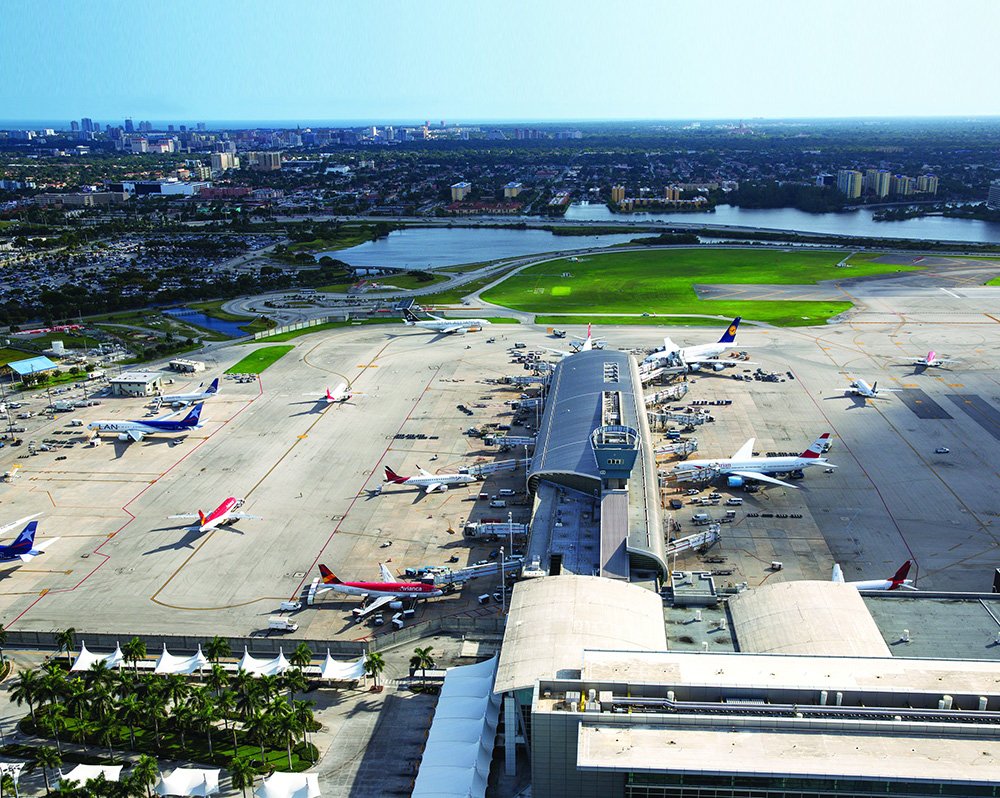
- Miami-Dade is examining whether a second commercial airport is needed as Miami International Airport approaches operational capacity limits driven by rising passenger and cargo demand.
- A county study outlines three potential solutions: upgrading Miami Executive Airport, expanding Homestead’s aviation site, or building a new airport in South Dade, each with significant cost and environmental hurdles.
- Economic forecasts suggest substantial long-term job and revenue losses if capacity is not expanded, but delivery timelines for any solution range from over a decade to more than 20 years.
Miami International Airport may soon face one of the most significant infrastructure decisions in its history as Miami-Dade County officials evaluate the possibility of developing a second commercial airport to address rising passenger traffic and growing cargo demand.
The discussion comes as Miami International Airport (MIA), one of the busiest international gateways in the United States and a major hub for trade between North America and Latin America, approaches critical operational capacity thresholds. County authorities have warned that existing infrastructure may struggle to accommodate future growth despite ongoing modernization investments.
According to a recently presented county aviation study, Miami-Dade is considering three potential long-term solutions: expanding Miami Executive Airport into a commercial passenger and cargo airport, upgrading Miami Homestead General Aviation Airport for broader aviation operations, or constructing an entirely new airport facility in South Dade.
Related Post


Each proposal carries substantial financial, operational, environmental, and political implications, with delivery timelines expected to extend well beyond a decade.
Rising Demand Pushing MIA Toward Operational Limits
Miami International Airport handled more than 500,000 aircraft movements in 2025, reaching approximately 80 percent of its estimated maximum operational capacity. Aviation planners generally regard this threshold as a critical point where airports must begin implementing long-term expansion strategies to avoid network congestion and operational bottlenecks.
While MIA is currently undergoing a multi-billion-dollar modernization programme, most of the investment is focused on terminal upgrades, passenger facilities, and service improvements rather than significant runway expansion or additional airside capacity.
Forecasts cited in the county study suggest that without major intervention, the airport could reach its effective operational ceiling by the late 2030s. Industry experts warn that prolonged congestion at major gateway airports can impact not only flight schedules and reliability but also cargo efficiency and broader regional economic competitiveness.
Cargo Growth Adds Pressure to Infrastructure Planning
The issue is particularly significant for the air cargo sector. Miami International Airport remains one of the world’s leading cargo hubs for perishables, pharmaceuticals, and Latin American trade flows, serving as a strategic logistics gateway between the United States, the Caribbean, and South America.
Any future capacity constraints could have major implications for freight operations, warehouse infrastructure, and supply chain reliability across the region.
County economic modelling indicates that failure to expand aviation capacity could result in substantial long-term economic losses. Projections suggest the region may forfeit tens of thousands of jobs and more than US$11 billion in economic activity by mid-century if aviation growth remains constrained.
Longer-term estimates indicate the impact could escalate further, potentially affecting hundreds of thousands of jobs tied directly and indirectly to airport-driven commerce, tourism, logistics, and international trade.
Three Expansion Options Under Consideration
Among the proposals under review, expanding Miami Executive Airport near Kendall represents one of the more immediately accessible options due to existing aviation infrastructure. However, significant upgrades would still be required to support large-scale passenger and cargo operations.
Another alternative involves transforming Miami Homestead General Aviation Airport into a secondary commercial gateway capable of handling both passenger traffic and freight services.
The most ambitious proposal under consideration is the construction of a completely new airport in South Dade. While potentially offering greater long-term capacity, such a project would likely face extensive environmental assessments, land-use debates, community opposition, and substantial financing challenges.
Long Development Timelines Present Additional Challenges
Even under accelerated planning scenarios, officials acknowledge that relief would not arrive quickly. Expanding existing airports could take between 12 and 15 years before operations are fully functional, while developing a new airport from the ground up may require more than two decades before commercial services begin.
Beyond construction challenges, planners must also address the operational complexities of managing a dual-airport system.
Industry analysts note that splitting passenger and cargo traffic across multiple airports requires efficient multimodal transport connections, integrated logistics planning, and carefully coordinated airspace management. For the cargo industry in particular, maintaining connectivity between freight terminals, distribution centres, customs infrastructure, and surrounding logistics corridors will be critical to avoiding inefficiencies.
As Miami continues to strengthen its role as a global aviation and logistics hub, the outcome of the county’s long-term airport strategy is expected to play a defining role in shaping the future of regional passenger travel and international cargo operations.