
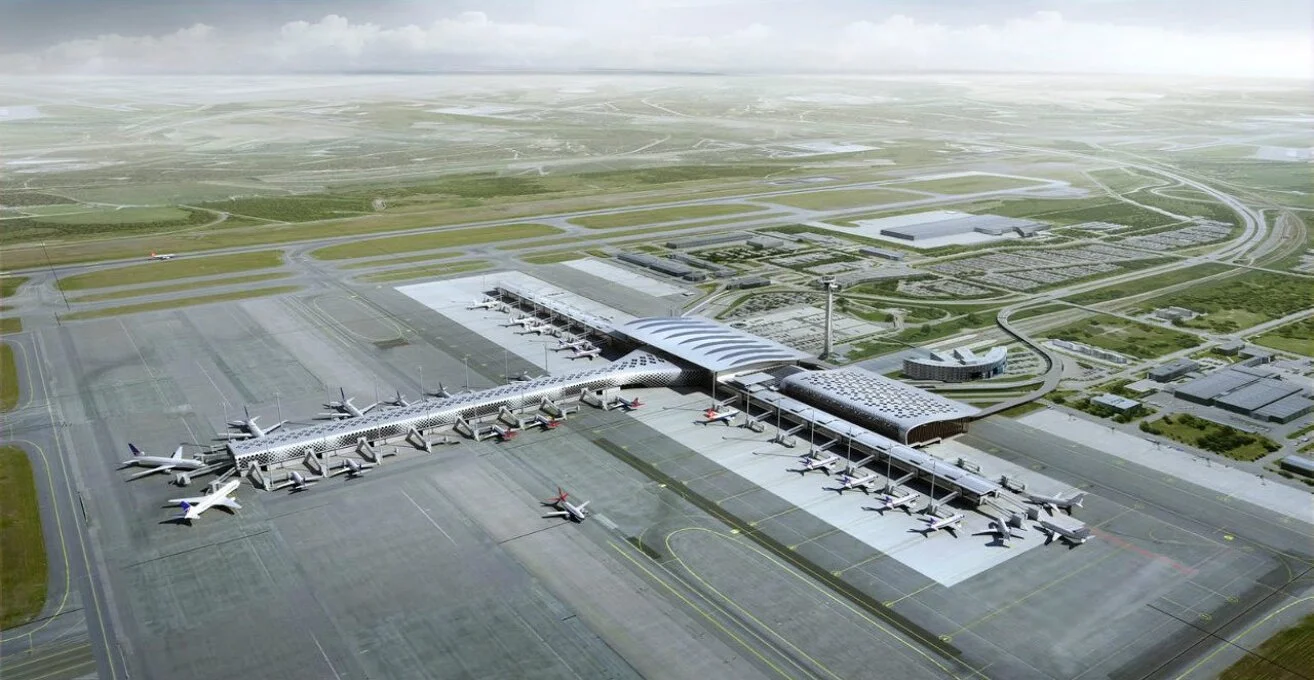
Oslo Airport has unveiled plans for a large-scale modernisation programme aimed at securing long-term capacity, operational efficiency, and competitiveness for Norway’s primary aviation gateway, with a central focus on developing a new dedicated cargo hub.
The initiative forms part of a comprehensive redevelopment concept designed to accommodate sustained growth in passenger traffic, import volumes, and, in particular, Norway’s rapidly expanding export-driven air cargo sector. The airport is currently operating under increasing capacity pressure, including a shortage of aircraft parking stands during peak periods and overnight operations, alongside strong growth in freight demand.
Airport officials confirmed that planning work has now begun to redesign the entire airport layout in order to optimise land use and future-proof infrastructure.



“We have essentially put the entire Oslo Airport on the drawing board,” said Thorgeir Landevaag, Airport Director at Oslo Airport, underscoring the scale and ambition of the long-term development strategy.
A key element of the proposal involves relocating the existing cargo zone to the western side of the airport, where new dedicated cargo and logistics terminals would be constructed. The relocation is intended to increase handling capacity, improve operational stability, and support industries that rely heavily on air freight, particularly Norway’s seafood export sector, which ranks as the country’s second-largest export category.
The airport has emphasised that the new cargo infrastructure would not only strengthen national logistics resilience but also generate significant employment opportunities and enhance Norway’s export competitiveness in global markets.
By repositioning cargo operations to a more optimised area of the airport, additional capacity within the current central zones would be freed up for expanded passenger operations and future route development. This reallocation is seen as critical in addressing existing bottlenecks, particularly aircraft parking shortages during high-demand periods.
While alternative solutions such as constructing remote parking stands have been considered, airport planners noted that such options would involve substantially higher costs and reduced operational efficiency. The proposed redevelopment therefore prioritises the reuse and optimisation of existing infrastructure assets.
In parallel with the cargo hub relocation, the airport operator is also evaluating enhancements to runway efficiency. Planned measures include the introduction of rapid exit taxiways and other technical and operational improvements designed to increase aircraft movement capacity without requiring significant additional land use or environmental impact.
These measures could help defer the need for a potential third runway, while still enabling the airport to accommodate projected growth in both passenger and cargo traffic over the coming decades.
Further long-term considerations include improved utilisation and potential expansion of terminal facilities, although such developments are expected to occur in later phases of the overall plan.
The broader redevelopment programme is currently projected for completion by 2040, with the cargo infrastructure component identified as one of the earliest phases of implementation, subject to investment approvals and regulatory clearance.
If realised, the project would represent one of the most significant transformations in Norway’s aviation infrastructure, reinforcing Oslo Airport’s role as a key logistics gateway for Northern Europe and global trade flows.