
SAL Logistics Services has signed a conditional sale and purchase agreement to acquire 100 percent of the share capital of Aviapartner Liège SA from Aviapartner Belgium NV and Aviapartner Holding NV, marking a significant step in the company’s international expansion strategy.
The transaction, structured as an all-cash deal, values the enterprise at approximately EUR 28 million (around SAR 123 million). Completion of the acquisition remains subject to customary closing conditions and regulatory approvals from the relevant authorities.
Strengthening Presence at a Key European Cargo Gateway
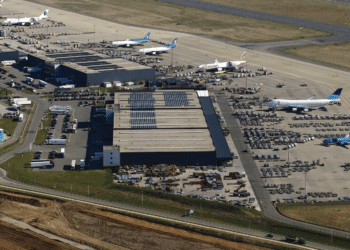
The acquisition will provide SAL Logistics Services with a direct operational footprint at Liège Airport, one of Europe’s fastest-growing air cargo hubs and a key centre for express freight, e-commerce logistics, and integrator operations.
Related Post


Liège Airport has established itself as a strategic node in European air cargo networks due to its 24-hour operations, unconstrained slot availability, and strong connectivity with major global logistics corridors. The addition of full ownership of Aviapartner Liège SA is expected to enhance SAL’s ability to serve airline customers, freight forwarders, and integrators across international markets.
Building an Integrated Global Logistics Platform
Commenting on the agreement, Omar Hariri, Chief Executive Officer of SAL Logistics Services, described the acquisition as a milestone in the company’s global growth strategy and its ambition to expand beyond domestic operations.
He noted that the transaction strengthens SAL’s operational capabilities in cargo handling and positions the company within one of Europe’s most important air freight ecosystems.
Hariri emphasised that the move supports the development of a more integrated logistics model, enabling improved connectivity between the Kingdom of Saudi Arabia and global trade routes, while expanding collaboration opportunities with airline partners and logistics customers.
The acquisition aligns with SAL’s broader strategy to build a globally connected logistics platform and expand its presence across key international cargo hubs, reinforcing its role in supporting national logistics transformation objectives.
Financial Integration and Growth Outlook
Upon completion, Aviapartner Liège SA is expected to be fully consolidated into SAL Logistics Services’ financial statements. The company anticipates that the acquisition will enhance operational performance and contribute positively to overall financial results over time.
The transaction is also expected to support revenue diversification and improve operational integration across SAL’s growing international network, strengthening efficiency and scalability in cargo handling operations.
Supporting Saudi Logistics Transformation Goals
The expansion forms part of SAL Logistics Services’ disciplined international growth strategy, which aims to build a global logistics operating platform while reinforcing its position as a national logistics champion.
The acquisition also aligns with the objectives of the Saudi Vision 2030 and the country’s National Transport and Logistics Strategy, both of which seek to position the Kingdom as a global logistics hub connecting Asia, Europe, and Africa.
By establishing a direct operational presence in Europe’s air cargo network, SAL continues to advance its strategy of integrating global supply chains and enhancing the Kingdom’s role in international trade flows.
Strategic Significance for Global Air Cargo Network
Industry observers view the move as part of a broader trend of strategic investment by Gulf-based logistics and aviation companies seeking to expand into high-value European cargo markets.
With global air freight demand increasingly driven by e-commerce growth, pharmaceutical logistics, and time-sensitive industrial supply chains, control of operational assets at major cargo airports is becoming a key competitive differentiator.
The acquisition of Aviapartner Liège SA is expected to strengthen SAL’s ability to participate more actively in these high-growth segments while enhancing its access to established European freight corridors.