
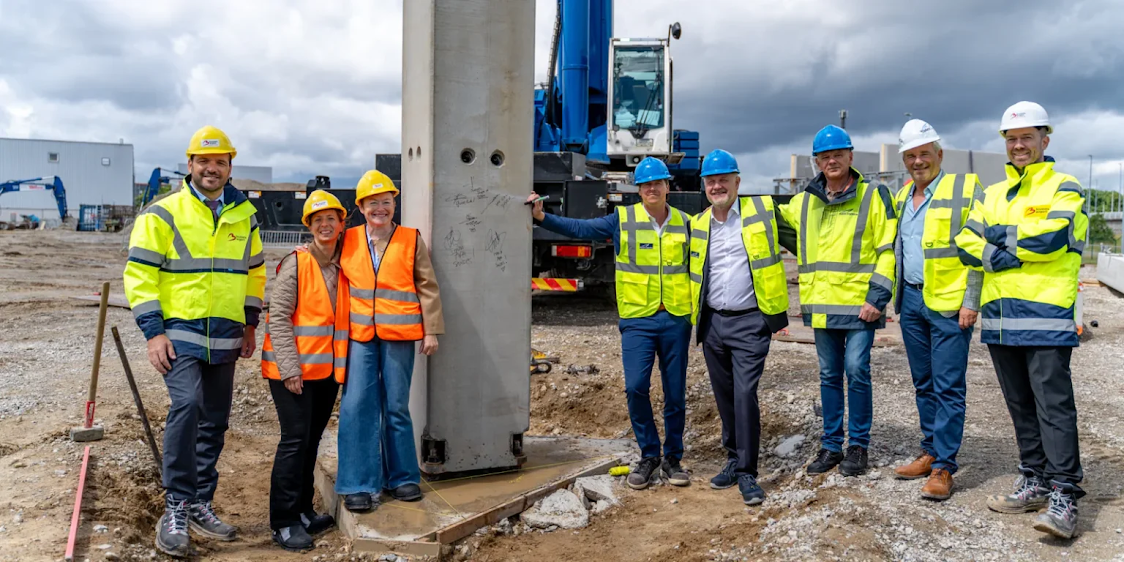
Brussels Airport has marked a significant milestone in the ongoing transformation of its cargo operations with the official first pillar ceremony for a new state-of-the-art logistics facility in its cargo zone, reinforcing the airport’s commitment to expanding capacity, improving operational efficiency, and advancing sustainable infrastructure development.
The new 14,000-square-metre second-line logistics facility, scheduled for completion in 2027, forms part of a broader modernization strategy aimed at strengthening Brussels Airport’s position as one of Europe’s leading air cargo and logistics gateways.
Located in the eastern section of the airport’s cargo zone, the development will provide modern warehouse and office space designed to support the evolving needs of logistics operators while creating additional capacity for long-standing airport partners operating in high-growth cargo sectors.
Related Post


The project reflects Brussels Airport’s long-term vision of building a more efficient, flexible, and environmentally sustainable cargo ecosystem capable of supporting future growth in pharmaceutical logistics, general cargo handling, and value-added supply chain services.
Expanding Capacity for Key Cargo Partners
Upon completion, the new facility will accommodate two established cargo operators with deep roots at Brussels Airport: Yusen Logistics and Air Promotion Agencies (APA).
Both companies have maintained a long-standing presence within the airport’s cargo community and play important roles in supporting international freight movements through the Belgian hub.
Yusen Logistics, a major global supply chain and logistics provider, continues to expand its operations in response to growing demand for integrated logistics solutions, particularly within the pharmaceutical and healthcare sectors.
Meanwhile, APA has built a strong presence in the general cargo market, supporting a wide range of freight forwarding and cargo handling activities.
The new logistics centre will provide both companies with modern infrastructure specifically designed to meet contemporary operational requirements, enabling greater efficiency, scalability, and service quality.
As cargo volumes continue to evolve and supply chain requirements become increasingly sophisticated, access to purpose-built facilities is becoming a critical factor in maintaining competitiveness within the global logistics sector.
Strengthening Brussels Airport’s Cargo Ecosystem
The development forms part of a wider programme of investment through which Brussels Airport is actively enhancing its cargo infrastructure and reinforcing its role as a strategic European logistics hub.
Over recent years, the airport has pursued a series of initiatives focused on improving cargo handling capabilities, optimizing land use, and attracting long-term investment from logistics providers, freight forwarders, and specialized cargo operators.
The new facility represents another step in that strategy, providing existing cargo partners with infrastructure that supports future growth while ensuring the airport can continue meeting the evolving demands of global trade and supply chains.
By redeveloping an existing site within the cargo zone, Brussels Airport is also maximizing the efficiency of available land resources while avoiding unnecessary expansion beyond the current logistics footprint.
The site became available following the demolition of an obsolete structure, allowing the airport to modernize a strategically important area and create a more productive environment for cargo-related activities.
Industry observers note that efficient land utilization has become increasingly important for major cargo hubs, particularly as growing demand for warehouse capacity competes with limited available airport real estate.
Designed Around Sustainability and Energy Efficiency
A key feature of the project is its strong focus on environmental sustainability.
The facility has been designed to achieve BREEAM Excellent certification, one of the world’s most widely recognized sustainability assessment standards for buildings.
BREEAM certification evaluates environmental performance across a range of criteria, including energy efficiency, resource management, carbon reduction, water conservation, and occupant well-being.
To support these objectives, the new logistics building will incorporate a range of advanced sustainability features, including:
- Timber beam structural construction
- Rooftop solar photovoltaic panels
- Energy-efficient heat pump systems
- Rain gardens for natural water management
- Rainwater collection and storage infrastructure
- Electric vehicle charging stations
- Dedicated bicycle parking facilities
These features are expected to significantly reduce the facility’s environmental footprint while supporting Brussels Airport’s broader sustainability ambitions.
The project aligns with wider aviation industry efforts to reduce carbon emissions and improve environmental performance throughout airport and logistics operations.
Modern Infrastructure for Future Logistics Needs
The building will be divided into two operational units, combining warehousing and office space tailored to the specific requirements of its future occupants.
The site will also include approximately 40 parking spaces, split evenly between the two units, along with dedicated loading bays designed to facilitate efficient cargo handling and vehicle movements.
As logistics operators increasingly seek facilities capable of supporting advanced inventory management, temperature-controlled cargo operations, and integrated supply chain services, modern warehouse infrastructure is becoming an increasingly important component of airport competitiveness.
For Brussels Airport, the project not only delivers additional capacity but also reinforces the airport’s reputation as a preferred location for high-value and specialized cargo sectors, including pharmaceuticals, healthcare products, and time-sensitive freight.
With cargo remaining a strategic growth pillar for the airport, continued investment in modern and sustainable logistics infrastructure is expected to play a crucial role in supporting long-term development and strengthening Brussels Airport’s position within Europe’s highly competitive cargo market.