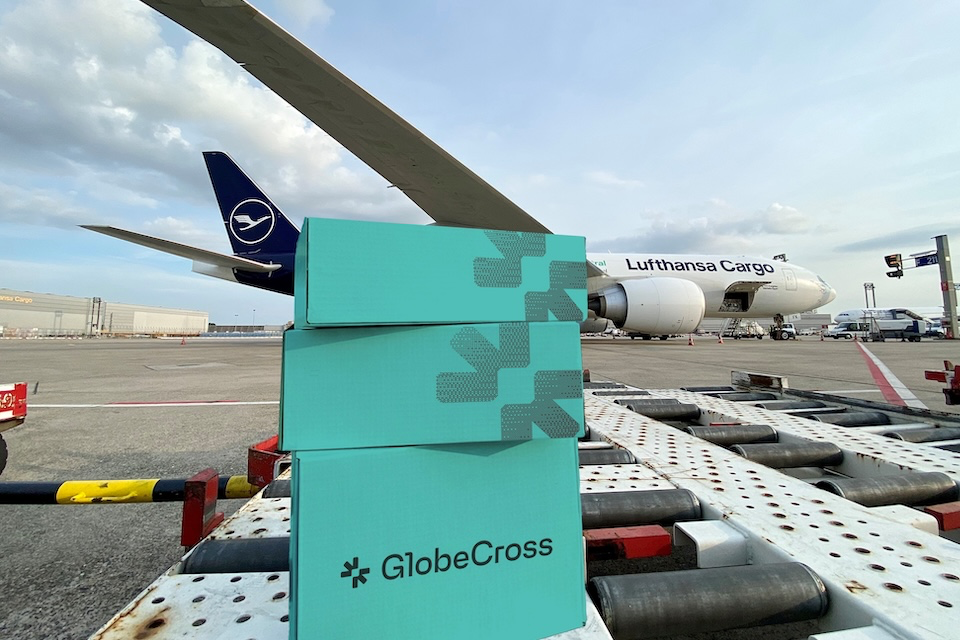
In a strategic move that signals the continued evolution of air cargo beyond traditional airport-to-airport transportation, Lufthansa Cargo has officially merged its digital e-commerce logistics platform Heyworld with customs specialist CB Customs Broker, creating a new wholly owned subsidiary, GlobeCross GmbH, designed to strengthen its position in cross-border parcel logistics and customs services.
The merger, formally completed on May 6, 2026, marks a significant expansion of Lufthansa Cargo’s service portfolio as the carrier moves deeper into integrated e-commerce logistics, customs automation, and last-mile connectivity. The newly launched GlobeCross will operate as an independent business within the Lufthansa logistics ecosystem, offering customers a single, streamlined interface for international parcel movements, digital customs clearance, and import gateway services.
Industry observers see the move as a direct response to the rapidly evolving cross-border e-commerce market, where speed, regulatory compliance, and end-to-end shipment visibility have become as critical as cargo capacity itself. By combining Heyworld’s digital parcel logistics expertise with CB Customs Broker’s more than two decades of certified customs experience, GlobeCross is positioned to deliver integrated solutions for retailers, marketplaces, freight forwarders, and parcel operators navigating increasingly complex global trade environments.
Related Post


Ashwin Bhat, Chief Executive Officer of Lufthansa Cargo, described the launch as a decisive strategic milestone for the company’s long-term transformation.
“With GlobeCross, we are significantly expanding our cross-border logistics capabilities and taking a decisive step in offering our customers solutions beyond traditional airport-to-airport transportation.”
He added that the combination of digital e-commerce logistics and customs expertise creates “a unique, fully integrated platform for cross-border parcel logistics,” strengthening Lufthansa Cargo’s market position while enabling faster, more compliant, and fully transparent logistics processes.
For existing customers of Heyworld and CB Customs Broker, Lufthansa Cargo confirmed that day-to-day operations will remain unchanged, with current contracts, contacts, and services continuing without disruption. However, customers are expected to benefit from shorter decision-making cycles, simplified operational structures, and faster deployment of tailored logistics solutions under the unified GlobeCross structure.
GlobeCross will focus on three core operational pillars:
End-to-End E-commerce Logistics – integrating international transportation, customs processing, and final-mile delivery into a single coordinated workflow.
E-commerce Import Terminals – dedicated import gateways at strategic air cargo hubs, supported by proprietary handling and customs software.
Digital Customs Clearance – automated import and export customs services backed by over 20 years of brokerage expertise and AEO-certified compliance processes.
The company will operate on an asset-light business model, prioritising software, digital workflows, and operational expertise rather than heavy physical infrastructure. This approach is expected to give GlobeCross the flexibility to scale quickly as e-commerce volumes continue to expand across Europe and global trade regulations become increasingly digitised.
The origins of the merger date back to October 2025, when Lufthansa Cargo first announced plans to unite both subsidiaries as part of its strategy to evolve from a pure cargo carrier into a broader logistics orchestrator. Heyworld, launched in 2019, was created to serve online retailers, marketplaces, and cross-border parcel operators, while CB Customs Broker joined the Lufthansa Cargo ecosystem in 2018 through its acquisition by time:matters.
With GlobeCross now operational from Frankfurt, Lufthansa Cargo is positioning itself at the intersection of digital commerce, customs compliance, and air cargo connectivity—an increasingly valuable space as global parcel volumes continue to outpace traditional freight growth.